Loading…
Nordstrom
Nordstrom wanted a family of typefaces that could perform across all communication channels in any context
Nordstrom wanted a family of typefaces that could perform across all communication channels in any context
Sharp Type was asked to create a bespoke suite of typefaces for Nordstrom, the American upmarket department store chain. Since 1901, when the first store opened in Seattle, Nordstrom has represented a quintessential vision of West Coast style and ease. Lucas Sharp was approached by creative director Jack Decaluwe, formerly of Instrument, who was a fan of our classic scriptface Ogg. Nordstrom wanted a family of typefaces that could perform across all communication channels in any context. To take it a step furher, they wanted an interpolating design space—using Ogg as the basis.
Lucas and the Sharp Type team created a trio of interpolating typefaces—a serif, flared serif, and sans
Lucas and the Sharp Type team created a trio of interpolating typefaces—a serif, flared serif, and sans
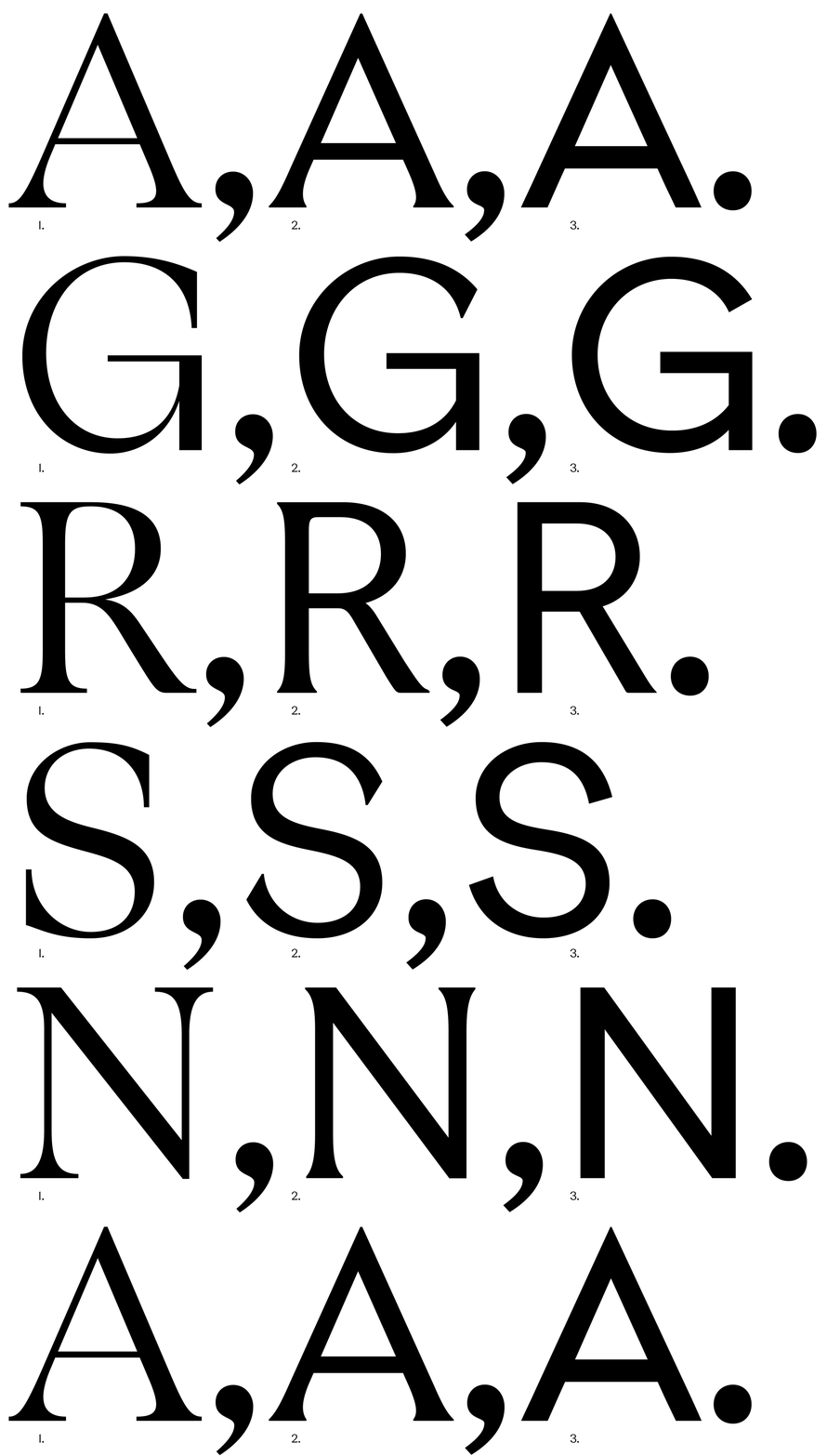
1.) Nordstrom Serif. 2.) Nordstrom Flare. 3.) Nordstrom Sans.
Lucas and the Sharp Type team created a trio of interpolating typefaces—a serif, flared serif, and sans—with the addition of a separate true italic for the serif. Two weight masters were created for each of these four styles.
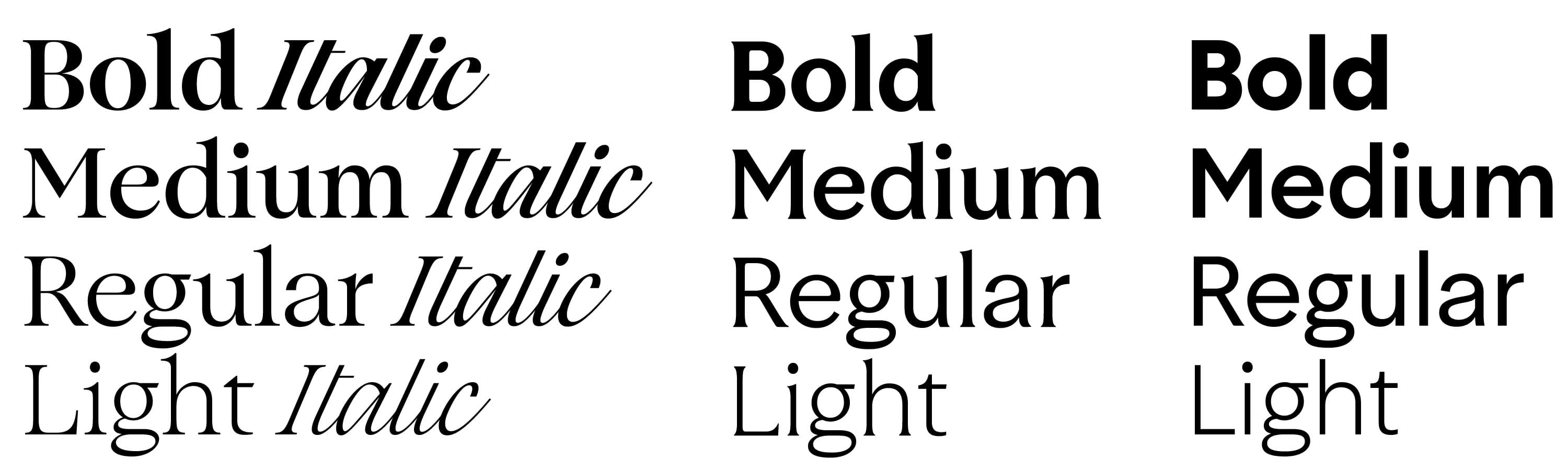
Left to right: Nordstrom Serif, Flare, Sans.
Nordstrom Serif Regular
Louis Vuitton
Nordstrom Serif
Nordstrom Serif
Ogg was used as the foundation for the serif style, which in turn became the model for Nordstrom’s sans and semi-serif letterforms. Ogg’s original design space had to be simplified and become more mechanical. The features that allow Ogg to work so well as a display face—its high contrast, calligraphic flourish, wildly expressive feel—had to be toned down and reconsidered for adaptability. Restraint was never a defining characteristic of Ogg, so the challenge was to discover the font’s utility without losing its core sensibility. Somewhat ironically, in the course of the design process,
▼
▼
Glistened
Eloquently
▼
▼
Spiritedly
Regionalist
▼
▼
Mercedes
Stylophone
▼
▼
Novelistic
Radicalizes
The italic we created for Nordstrom also bears mentioning. It’s the one style that does not interpolate with the rest, and the design was very deliberate, pairing with the scriptface. Although it flows like a calligraphic scriptface, the design is more representational, its connecting semi-script forms and ligatures mechanically constructed. Lucas ended up liking the design so much, that he was inspired to draw an entirely new typeface, which will be coming out sooner than later.
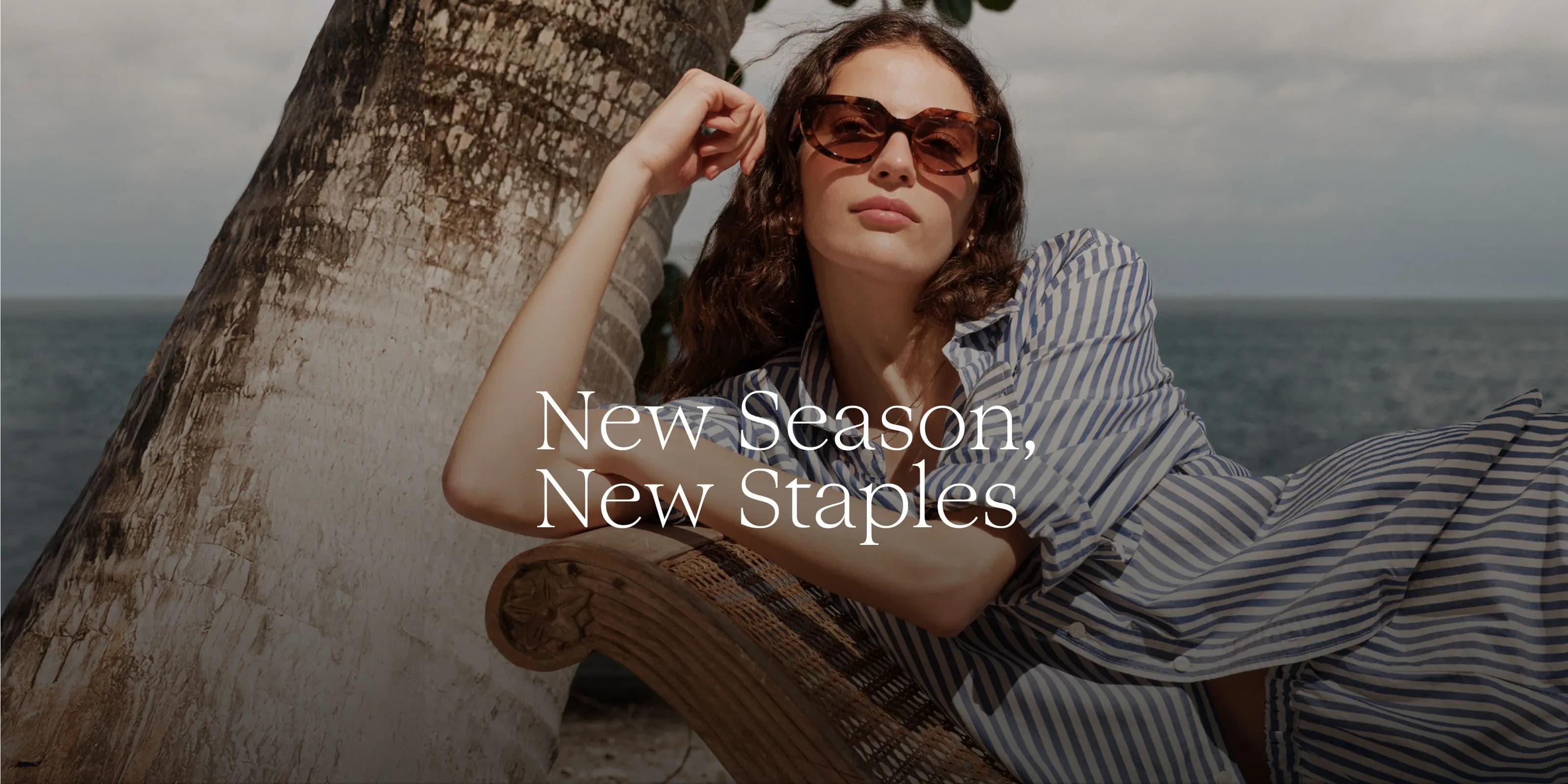
Nordstrom Serif
65
1901: John W. Nordstrom, having struck gold in the Klondike, partnered with Carl Wallin to open the Wallin & Nordstrom shoe store on Fourth and Pike in Seattle.
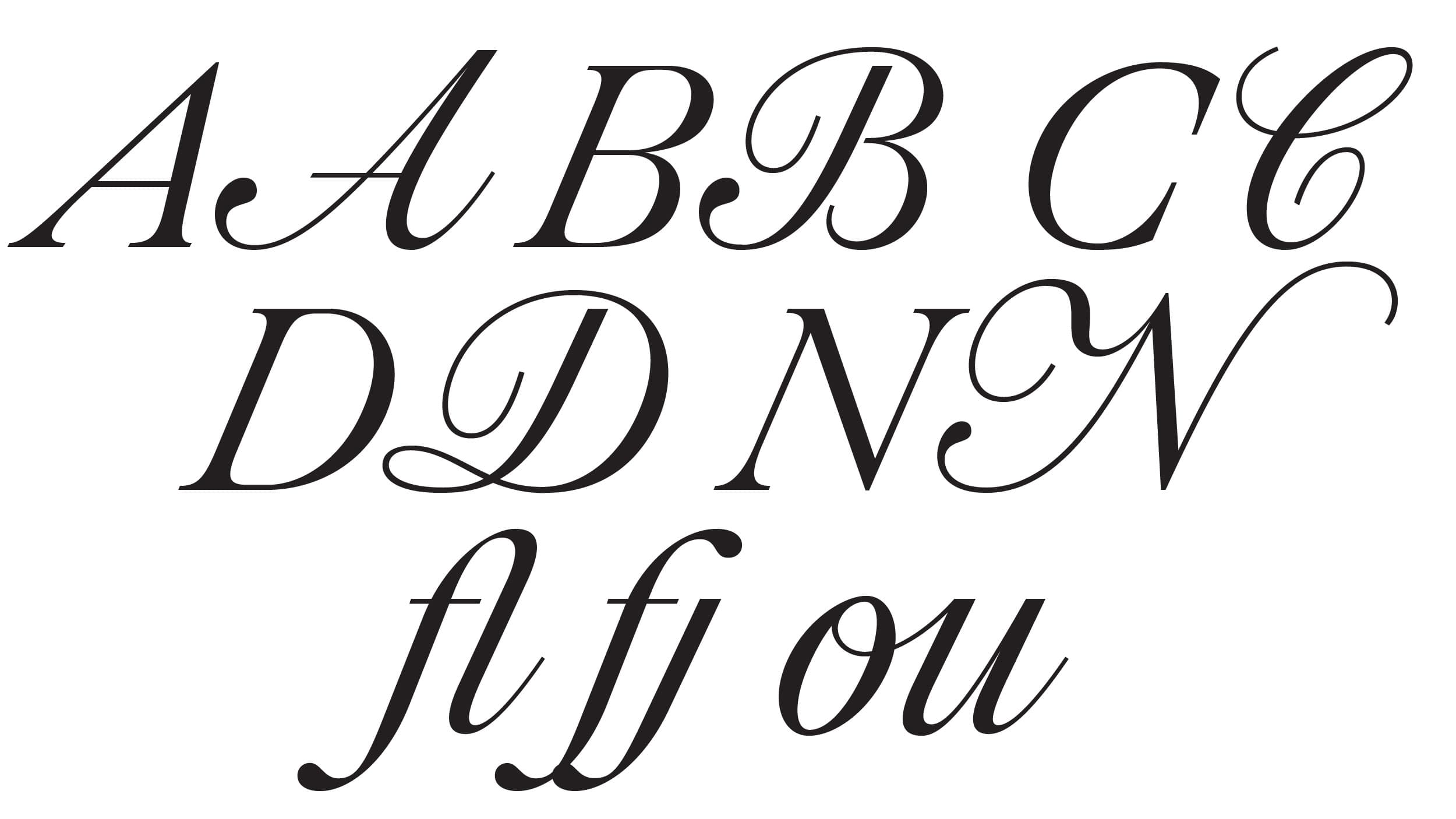
Swash alternates featured in the Serif Italic.
Nordstrom Serif
45
Nordstrom began as a Humble Shoe Store in 1901 when Swedish immigrant John W. Nordstrom and shoemaker Carl F. Wallin partnered in Seattle. Over the decades, the founding family grew it into a Multi-Billion Dollar, Upscale Fashion Retailer famous for legendary customer service and off-price outlets.
Nordstrom Serif Medium
22
John W. Nordstrom was born on February 15, 1871, in the village Alvik near Luleå in Northern Sweden. In 1887, Nordstrom immigrated to the United States at the age of 16. His name at birth was Johan Wilhelm Nordström, which he later anglicized to John W. Nordstrom. After landing in New York, he began working in Michigan and was able to save enough money to purchase 20-acre (81,000 square meter) potato farm in Arlington, Washington. In 1897, he joined the Klondike Gold Rush in Canada's Yukon Territory. After two years of prospecting, he finally struck gold, but sold his disputed claim for $13,000. Returning to Seattle with his newfound wealth, he married Hilda Carlson in 1900 and searched for a business venture.
Nordstrom Serif Light
22
Their business continued beyond stores in 1974. On December 5, the National Football League announced the signing of a franchise agreement that would put a team in Seattle, Washington. Representing the family as majority partner of the consortium was Lloyd W. Nordstrom. However, he would never see a game as owner, as he died of a heart attack on January 20, 1976, eight months before the newly christened Seattle Seahawks took the field.[10] With his death, the estate of Mr. Nordstrom would oversee the team, with co-owner and entrepreneur Herman Sarkowsky serving as the team's first chief operating officer.[
Nordstrom Sans
Nordstrom Sans
Nordstrom Sans rounds out the interpolating family. We created a geometric to work at scales large and small, and the design complements the Serif and Flare styles using Nordstrom’s logotype as a reference with its pointy diagonal elbows, and Ogg’s /O, which is actually quite geometric in shape.
▼
▼
Andalúzia
Beistehen
▼
▼
Colophon
Dialtectic
▼
▼
Entsprach
Fanciness
▼
▼
Granularly
Intohimoa
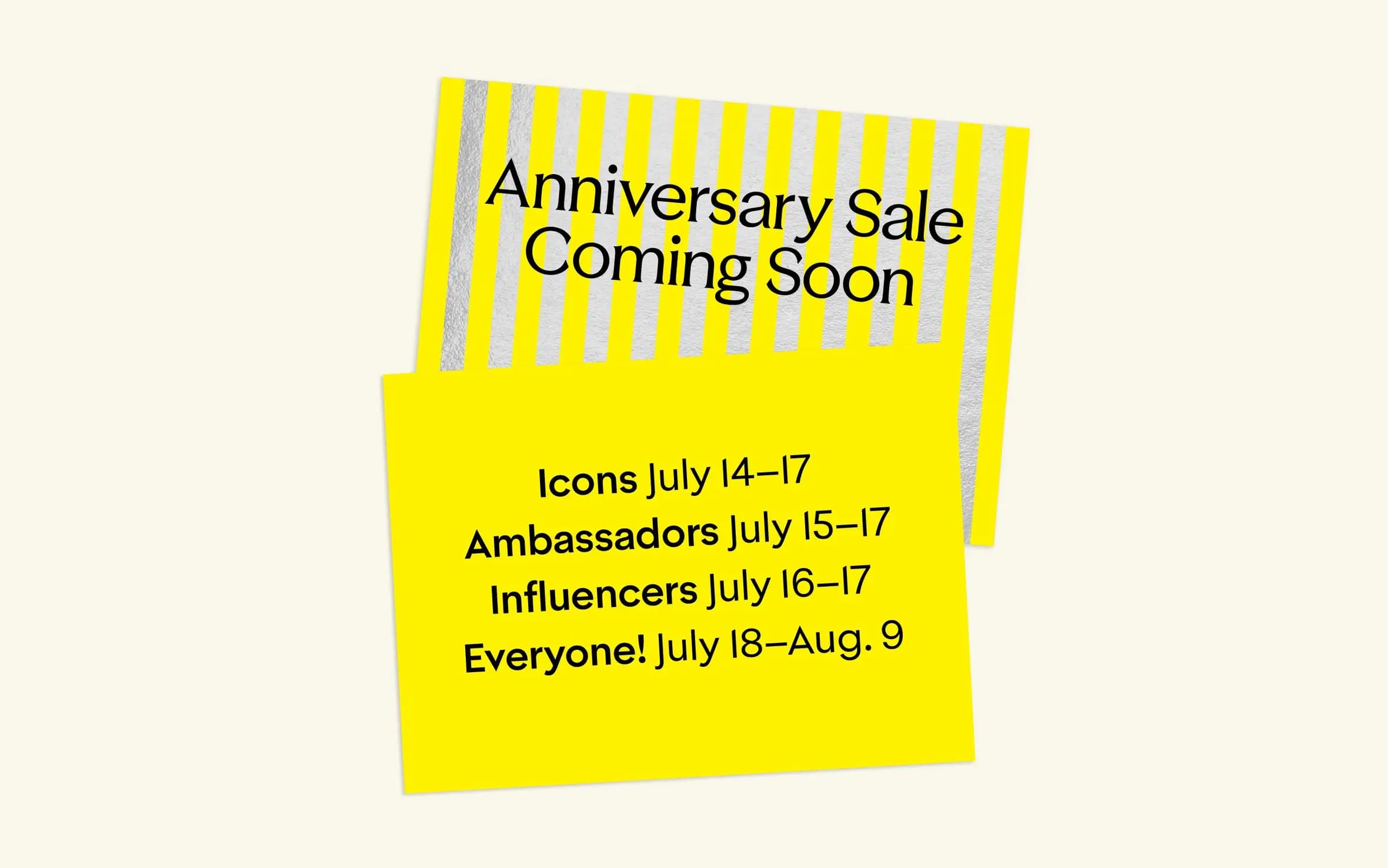
Nordstrom Sans Bold
65
1928–1933: John W. Nordstrom retired, selling his shares to his sons Everett and Elmer. Carl Wallin also sold his stake to the Nordstrom family, making it a completely family-owned enterprise.
Nordstrom Sans Medium
30
John W. Nordstrom was born on February 15, 1871, in the village Alvik near Luleå in Northern Sweden. In 1887, Nordstrom immigrated to the United States at the age of 16. His name at birth was Johan Wilhelm Nordström, which he later anglicized to John W. Nordstrom. After landing in New York, he began working in Michigan and was able to save enough money to purchase 20-acre (81,000 square meter) potato farm in Arlington, Washington. In 1897, he joined the Klondike Gold Rush in Canada's Yukon Territory. After two years of prospecting, he finally struck gold, but sold his disputed claim for $13,000. Returning to Seattle with his newfound wealth, he married Hilda Carlson in 1900 and searched for a business venture.
Nordstrom Sans Light
30
Their business continued beyond stores in 1974. On December 5, the National Football League announced the signing of a franchise agreement that would put a team in Seattle, Washington. Representing the family as majority partner of the consortium was Lloyd W. Nordstrom. However, he would never see a game as owner, as he died of a heart attack on January 20, 1976, eight months before the newly christened Seattle Seahawks took the field.[10] With his death, the estate of Mr. Nordstrom would oversee the team, with co-owner and entrepreneur Herman Sarkowsky serving as the team's first chief operating officer.[
Nordstrom Flare
Nordstrom Flare
To this point, in addition to Ogg, clients like Nordstrom have been interested in the flared serif—also called a semi-serif—as an editorial and branding style. If the sans represents neutrality, clean design, and minimalism, the flared serif toes aesthetic and functional lines—it’s a style that, when done well, offers distinction with a more restrained elegance. For Nordstrom, we developed a flared serif as the “in-between” style. While the flared/semi-serif is having a moment, it’s a long-established style, and not the first one that we’ve published (explore Ceraph here).
▼
▼
Revitalize
Notations
▼
▼
Glorifying
Solarzelle
▼
▼
Lowestoft
Monarchs
▼
▼
St. Helena
Sapphires

Nordstrom Flare Bold
65
Carl Wallin also sold his stake to the Nordstrom family, making it a completely family-owned enterprise.
Nordstrom Flare Regular
45
By 1975, Nordstrom expanded into Alaska (the only time by acquisition) by purchasing Northern Commercial Company and opened its first Nordstrom Rack clearance store in Seattle. A strong northwest regional retailer with sales already approaching $250 million making it the third-largest specialty retailer in the United States
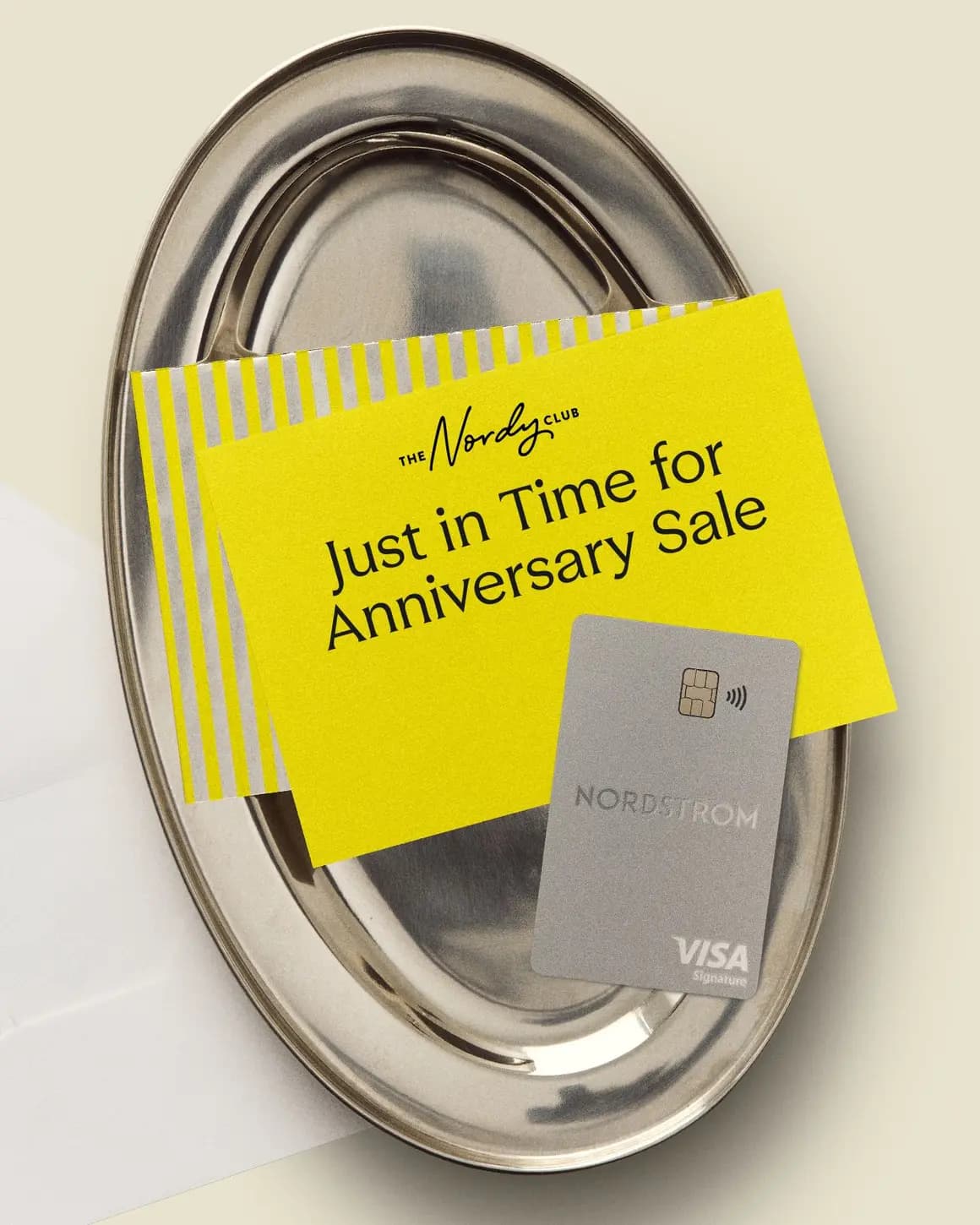
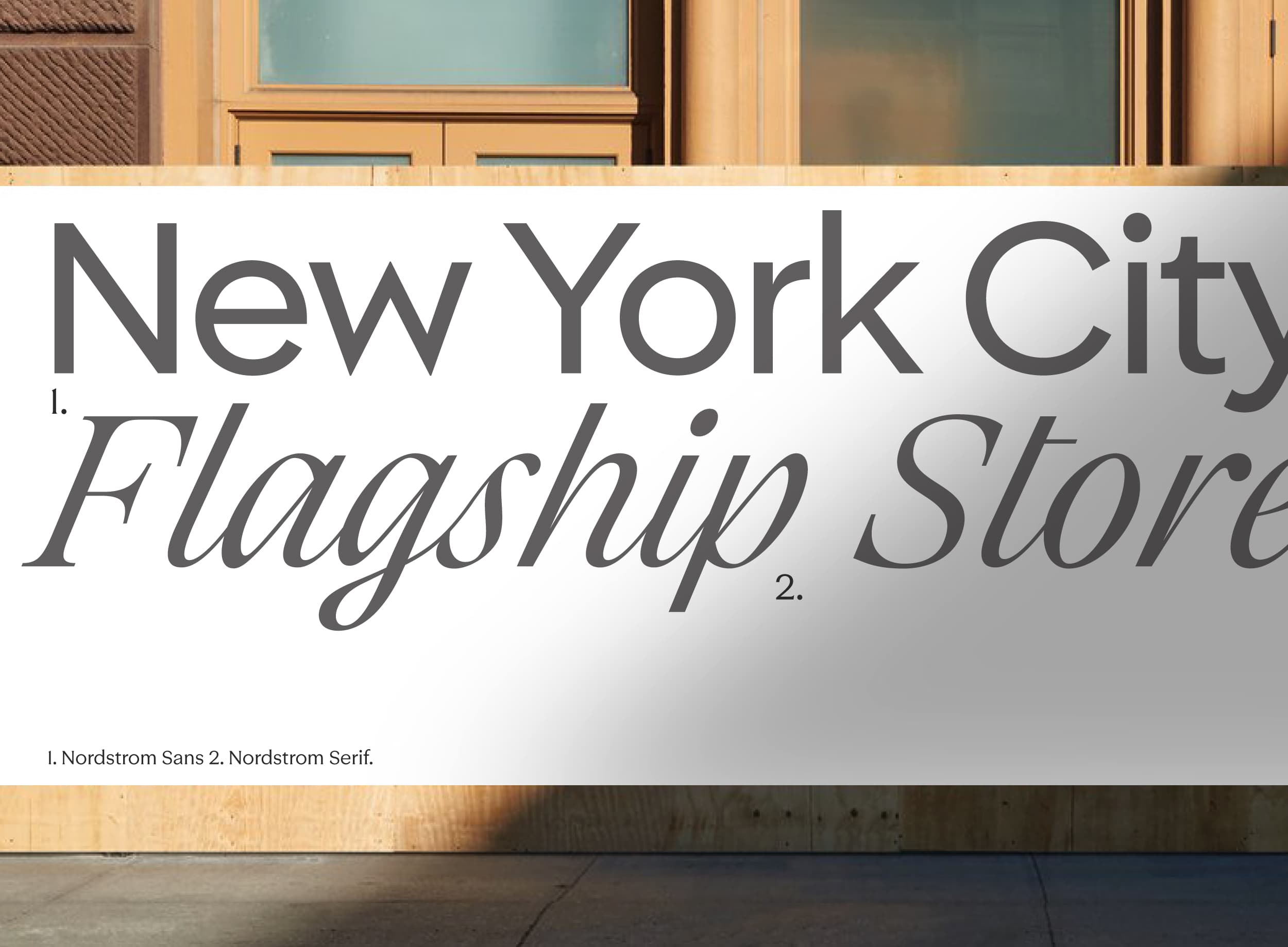
Nordstrom Flare, in use 2026
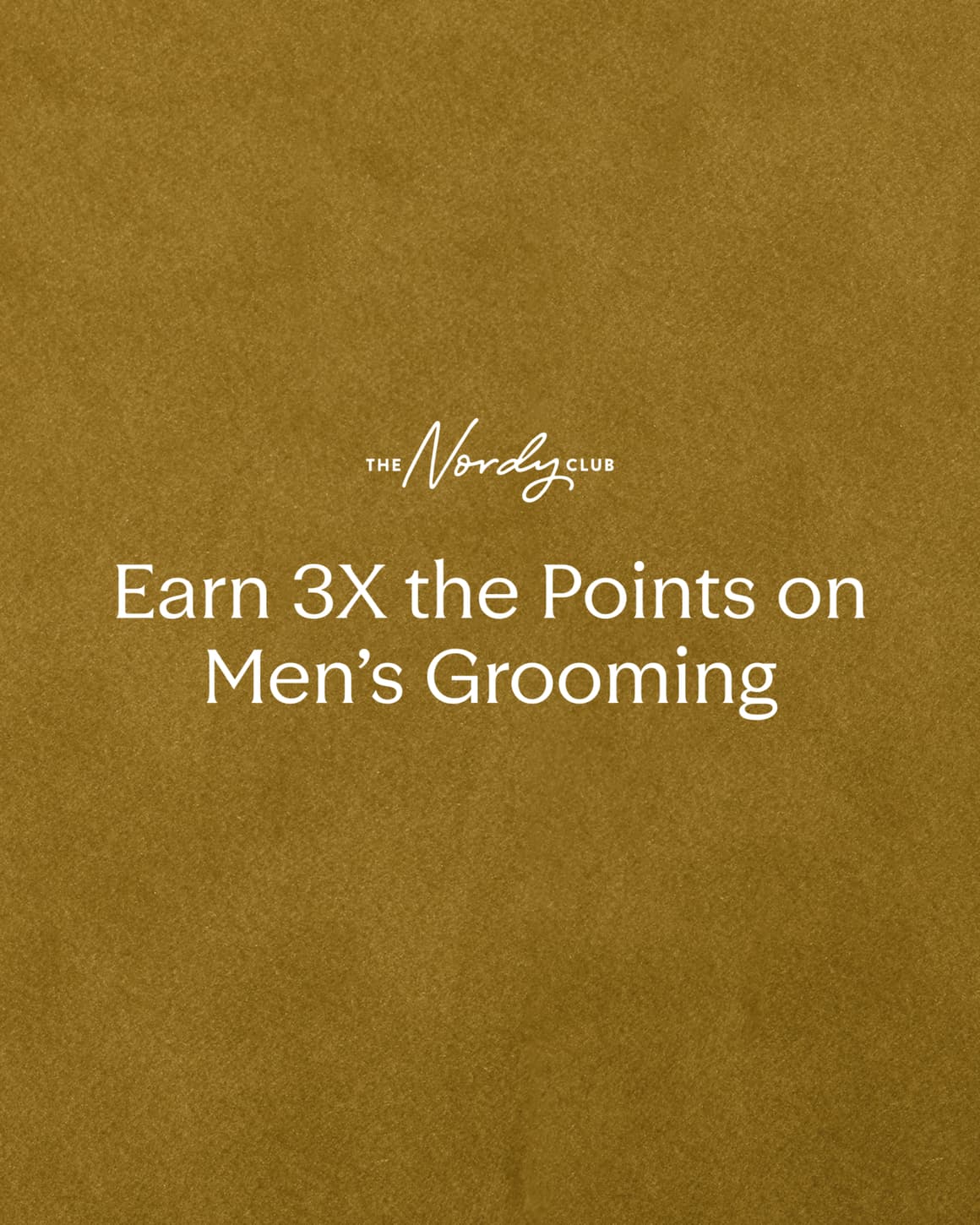
Nordstrom Flare, in use 2026