Loading…
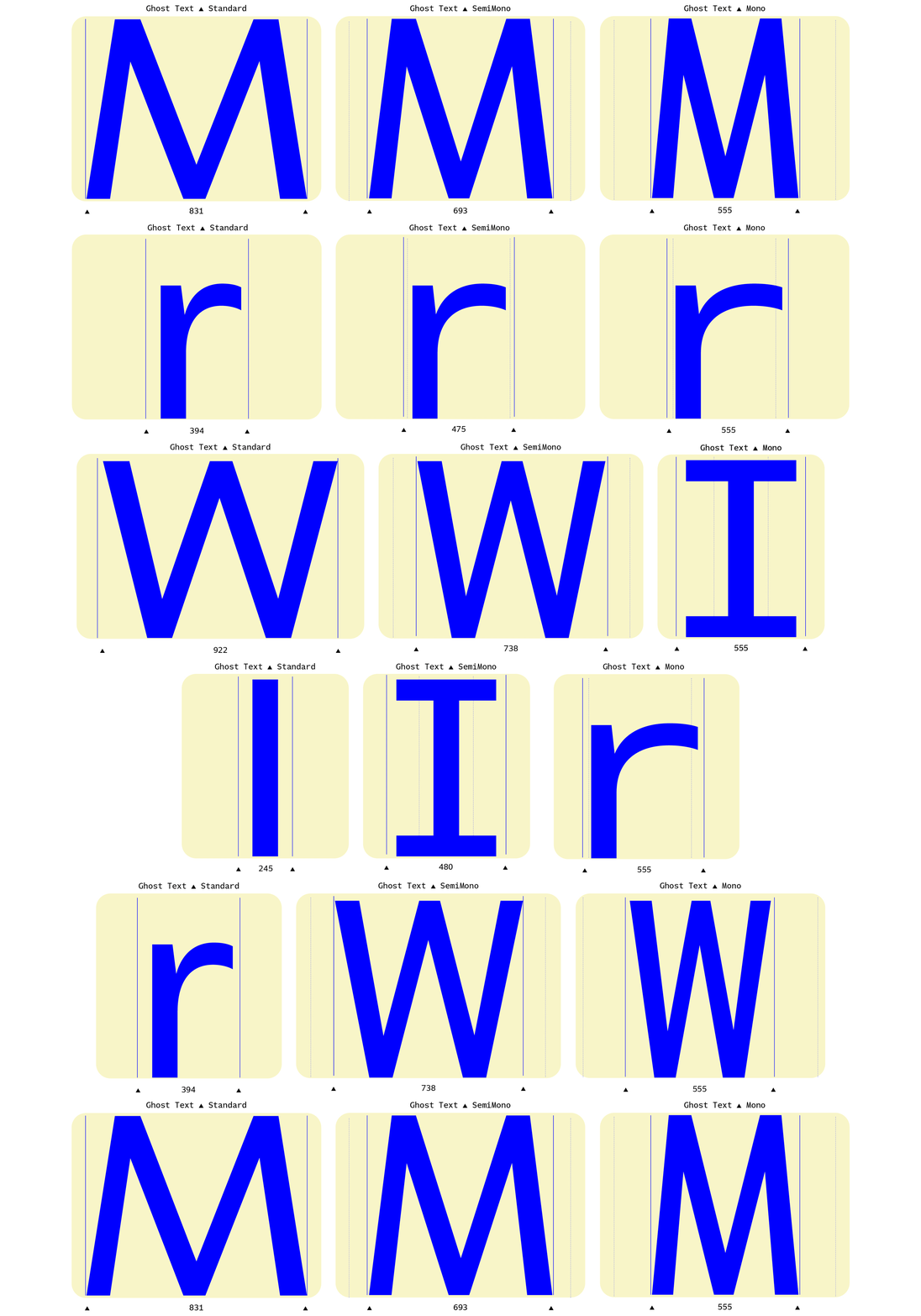
Ghost Text Mono
Ghost Superfamily is here, newly present and fully formed. Originally released in 2022 in a single display family, Lucas Sharp’s playful yet reverent resurrection of the Humanist sans debuted as an argument for a new standard in type design. Working backwards from the genre’s origins in Roman inscriptional writing, through the representational lens of Edward Johnston’s mechanically constructed forebears, Ghost’s chimeric identity was designed for adaptability, with a distinctive personality unbeholden to genre yet dexterous in its diachronic construction.
Through seamless variable axes that scale across display, text, and coding functions, Ghost Superfamily delves into the full potential of variable font technology, giving us the opportunity to explore its applications twofold as our most robust design tool for typographers, and as a new technological standard in our craft. Lucas, with My-Lan Thuong, Léna Le Pommelet, and Daniel Veneklaas, spent four years developing the superfamily, which now includes seventy-two styles across five weights with an optical size and mono axes, all integrated into a single variable designspace.
Through seamless variable axes that scale across display, text, and coding functions, Ghost Superfamily delves into the full potential of variable font technology, giving us the opportunity to explore its applications twofold as our most robust design tool for typographers, and as a new technological standard in our craft. Lucas, with My-Lan Thuong, Léna Le Pommelet, and Daniel Veneklaas, spent four years developing the superfamily, which now includes seventy-two styles across five weights with an optical size and mono axes, all integrated into a single variable designspace.
Designers: Lucas Sharp, My-Lan Thuong, Léna Le Pommelet, and Daniel Veneklaas | Engineer: Connor Davenport, Calvin Kwok | Kerning: Igino Marini
Version History
V.1 Apr 2022V.2 Apr 2026
▼
▼
Windows
Gateway
▼
▼
Compute
Discman
▼
▼
Bassman
Walking
▼
▼
Zumthor
Megaman
▼
▼
Dietary
Placebo
▼
▼
Lineage
Helpers
▼
▼
Light
23
Third studio album by Eminem, released May 23, 2000, by Aftermath Ent, Interscope Records, and Shady Records. The album was produced principally by Dr. Dre and Eminem, with additional production from The 45 King, the Bass Brothers, and Mel-Man, and was recorded in Detroit-area studios over approximately two months. The programme broadcast from a glass-walled studio overlooking Times Square in New York City and counted down the day's ten most-requested music videos based on viewer voting. TRL functioned during its peak years as the principal arbiter of mainstream American pop visibility:
Light Italic
23
1.78 million copies in its first week in the United States, which was at the time the fastest-selling solo album in American history, a record that would stand until Adele's 25 in 2015. The programme broadcast from a glass-walled studio overlooking Times Square in New York City and counted down the day's ten most-requested music videos based on viewer voting. TRL functioned during its peak years as the principal arbiter of mainstream American pop visibility:
Light
16
Total Request Live, a daily live music-video countdown programme that aired on MTV from September 14, 1998, to November 16, 2008, hosted principally by Carson Daly. The programme broadcast from a glass-walled studio overlooking Times Square in New York City and counted down the day's ten most-requested music videos based on viewer voting. TRL functioned during its peak years as the principal arbiter of mainstream American pop visibility: Total Request Live, a daily live music-video countdown programme that aired on MTV from September 14, 1998, to November 16, 2008, hosted principally by Carson Daly. The programme broadcast from a glass-walled studio overlooking Times Square in New York City and counted down the day's ten most-requested music videos based on viewer voting. TRL functioned during its peak years as the principal arbiter of mainstream American pop visibility:
Light Italic
16
The album spent eight consecutive weeks at number one on the Billboard 200, sold over twenty-five million copies worldwide, was certified Diamond by the RIAA, and won the Grammy Award for Best Rap Album. The album's lead single "The Real Slim Shady" and its third single "Stan" — the latter sampling Dido's "Thank You" — became cultural reference points sufficiently durable that "stan" would, by the late 2010s, enter dictionary usage as a verb meaning to follow obsessively.The album spent eight consecutive weeks at number one on the Billboard 200, sold over twenty-five million copies worldwide, was certified Diamond by the RIAA, and won the Grammy Award for Best Rap Album. The album's lead single "The Real Slim Shady" and its third single "Stan" — the latter sampling Dido's "Thank You" — became cultural reference points sufficiently durable that "stan" would, by the late 2010s, enter dictionary usage as a verb meaning to follow obsessively.
Loading…
0
300
0
0
Loading…
300
0
Mixed Weights
50
AAAAAAA BBBBBBB CCCCCCC DDDDDDD EEEEEEE FFFFFFF GGGGGGG HHHHHHH IIIIIII JJJJJJJ KKKKKKK LLLLLLL MMMMMMM NNNNNNN 0000000 PPPPPPP QQQQQQQ RRRRRRR SSSSSSS TTTTTTT UUUUUUU VVVVVVV WWWWWWW XXXXXXX YYYYYYY ZZZZZZZ
Light
10
Total Request Live, a daily live music-video countdown programme that aired on MTV from September 14, 1998, to November 16, 2008, hosted principally by Carson Daly. The programme broadcast from a glass-walled studio overlooking Times Square in New York City and counted down the day's ten most-requested music videos based on viewer voting. TRL functioned during its peak years as the principal arbiter of mainstream American pop visibility: a music video's appearance on the countdown was both a signal of and a contributor to commercial success, and the programme's daily demand for new content shaped the production schedules of the major labels. The programme is closely associated with the visual culture of late-1990s and early-2000s teen pop, hip-hop, and pop-punk, and with the recurring image of crowds gathered at the Times Square studio windows. Total Request Live, a daily live music-video countdown programme that aired on MTV from September 14, 1998, to November 16, 2008, hosted principally by Carson Daly. The programme broadcast from a glass-walled studio overlooking Times Square in New York City and counted down the day's ten most-requested music videos based on viewer voting. TRL functioned during its peak years as the principal arbiter of mainstream American pop visibility: a music video's appearance on the countdown was both a signal of and a contributor to commercial success, and the programme's daily demand for new content shaped the production schedules of the major labels. The programme is closely associated with the visual culture of late-1990s and early-2000s teen pop, hip-hop, and pop-punk, and with the recurring image of crowds gathered at the Times Square studio windows.
Light Italic
10
Peer-to-peer file-sharing application launched June 1, 1999, by Shawn Fanning and Sean Parker. Napster used a centralised index that allowed users to search the music libraries of every connected user and download MP3 files directly between machines. At its peak it had approximately eighty million registered users. The Recording Industry Association of America filed suit on December 7, 1999, and Metallica filed a separate lawsuit in April 2000 after a demo of the unreleased song "I Disappear" leaked onto the platform. A federal injunction issued March 5, 2001, required Napster to block the trading of copyrighted material; the company was unable to comply and shut its network on July 1, 2001. The file-sharing rupture continued through Audiogalaxy, Kazaa, Limewire, and Soulseek, each of which routed around Napster's centralised vulnerability through varying degrees of decentralisation. The combined effect was to dismantle the album as a unit of consumption approximately a decade before the streaming services would formally complete the transition. Peer-to-peer file-sharing application launched June 1, 1999, by Shawn Fanning and Sean Parker. Napster used a centralised index that allowed users to search the music libraries of every connected user and download MP3 files directly between machines. At its peak it had approximately eighty million registered users. The Recording Industry Association of America filed suit on December 7, 1999, and Metallica filed a separate lawsuit in April 2000 after a demo of the unreleased song "I Disappear" leaked onto the platform. A federal injunction issued March 5, 2001, required Napster to block the trading of copyrighted material; the company was unable to comply and shut its network on July 1, 2001. The file-sharing rupture continued through Audiogalaxy, Kazaa, Limewire, and Soulseek, each of which routed around Napster's centralised vulnerability through varying degrees of decentralisation. The combined effect was to dismantle the album as a unit of consumption approximately a decade before the streaming services would formally complete the transition.
Helper

Light Italic
10
Solo debut album by Lauryn Hill, released August 25, 1998, by Ruffhouse and Columbia Records. Recorded principally at Tuff Gong Studios in Kingston, Jamaica, and Chung King Studios in New York. The album sold over twenty million copies worldwide, won five Grammy Awards including Album of the Year — making Hill the first woman to win five Grammys in a single night and the first hip-hop album to win Album of the Year — and is generally considered one of the defining albums of the late 1990s. Miseducation occupies the high point of the neo-soul movement, a genre vocabulary that included D'Angelo's Voodoo (2000), Erykah Badu's Mama's Gun (2000), Maxwell's Now (2001), and Jill Scott's Who Is Jill Scott? (2000). The movement's stylistic register — live instrumentation, Rhodes piano, vintage analogue warmth, and explicit reference to 1970s soul — distinguished it from the polished R&B of the period's mainstream charts. Solo debut album by Lauryn Hill, released August 25, 1998, by Ruffhouse and Columbia Records. Recorded principally at Tuff Gong Studios in Kingston, Jamaica, and Chung King Studios in New York. The album sold over twenty million copies worldwide, won five Grammy Awards including Album of the Year — making Hill the first woman to win five Grammys in a single night and the first hip-hop album to win Album of the Year — and is generally considered one of the defining albums of the late 1990s. Miseducation occupies the high point of the neo-soul movement, a genre vocabulary that included D'Angelo's Voodoo (2000), Erykah Badu's Mama's Gun (2000), Maxwell's Now (2001), and Jill Scott's Who Is Jill Scott? (2000). The movement's stylistic register — live instrumentation, Rhodes piano, vintage analogue warmth, and explicit reference to 1970s soul — distinguished it from the polished R&B of the period's mainstream charts.
ExtraBold
ffffff
▼
▼
Regular
23
Compact disc sales reached their all-time peak in 2000 at $13.4 billion in the United States and have declined steadily ever since. The second wave of ska, the first commercial wave of trance, the early days of grime, and the maturation of hip-hop into its commercial peak. What follows is an index of the principal artists, albums, scenes, and infrastructural artefacts that defined the Y2K musical landscape. A prominent style in the late 1990s and early 2000s, considered a more natural and "down-to-earth" version of Y2K's futurist optimism. Characterized by urban and liminal settings such as airports, subway stations, hotel lobbies, and corporate plazas; a heavy use of minimalism; and a cool, often blue- or green-toned color scheme. The aesthetic favored ambient electronica, restrained typography, and a slightly melancholic relationship to the era's promised future. Gen X Soft Club's tone is contemplative rather than exuberant, and it is often associated with the album packaging, book covers, and editorial photography of the period rather than with consumer electronics or fashion.
Italic
23
The musical surface of the period was dominated by the polished output of a small number of large pop machines, but beneath this surface lay a more turbulent set of currents: nu-metal in the United States, garage and two-step in the United Kingdom, Also known as Coconut Girl, though not to be confused with Key West Kitten, which shares that nickname. An aesthetic prevalent from roughly 2003 to 2008, sitting at the late edge of the Y2K period and overlapping with the early Frutiger Aero years. Characterized by tropical motifs—palm trees, hibiscus prints, seashells, sunsets, and beach scenery—rendered through the glossy graphical conventions of the period. The aesthetic was ubiquitous in tween-oriented media: Limited Too apparel, Lizzie McGuire and That's So Raven set design, Bratz packaging, and Disney Channel original films set in coastal locations. Surf Crush represents the warmer, more saturated counterpart to the cooler chrome-blue palettes that dominated earlier Y2K design.
Regular
16
The second wave of ska, the first commercial wave of trance, the early days of grime, and the maturation of hip-hop into its commercial peak. What follows is an index of the principal artists, albums, scenes, and infrastructural artefacts that defined the Y2K musical landscape. Max Martin and produced by Martin and Rami Yacoub at Cheiron Studios in Stockholm. The song had previously been offered to TLC, the Backstreet Boys, and the Swedish pop group Five, all of whom declined it. The album was recorded in Stockholm and at 4MW East Studios in New Jersey. Programming block on Cartoon Network that launched September 2, 2001, at 10:00 p.m. ET, with the previously shelved Home Movies episode "Director's Cut" airing as the official premiere. The block was developed by Mike Lazzo at Williams Street Studios, the same Atlanta-based production unit responsible for Space Ghost Coast to Coast. The initial lineup included Home Movies, Space Ghost Coast to Coast, The Brak Show, Sealab 2021, Harvey Birdman, Attorney at Law, and the anime series Cowboy Bebop. Aqua Teen Hunger Force premiered shortly after. The block initially ran from 10:00 p.m. to 1:00 a.m. on Sundays, with full repeats on Thursdays. The name refers to the policy at public swimming pools of clearing children from the water during designated adult-only intervals. Bumpers used white Helvetica on black backgrounds with minimal music, a deliberately cheap aesthetic that became the block's signature.
Italic
16
Debut studio album by Britney Spears, released January 12, 1999, by Jive Records. The lead single of the same name had been released on September 29, 1998, written by Max Martin and produced by Martin and Rami Yacoub at Cheiron Studios in Stockholm. The song had previously been offered to TLC, the Backstreet Boys, and the Swedish pop group Five, all of whom declined it. The album was recorded in Stockholm and at 4MW East Studios in New Jersey The second wave of ska, the first commercial wave of trance, the early days of grime, and the maturation of hip-hop into its commercial peak. What follows is an index of the principal artists, albums, scenes, and infrastructural artefacts that defined the Y2K musical landscape. Max Martin and produced by Martin and Rami Yacoub at Cheiron Studios in Stockholm. The song had previously been offered to TLC, the Backstreet Boys, and the Swedish pop group Five, all of whom declined it. The album was recorded in Stockholm and at 4MW East Studios in New Jersey

Regular
10
...Baby One More Time: Debut studio album by Britney Spears, released January 12, 1999, by Jive Records. The lead single of the same name had been released on September 29, 1998, written by Max Martin and produced by Martin and Rami Yacoub at Cheiron Studios in Stockholm. The song had previously been offered to TLC, the Backstreet Boys, and the Swedish pop group Five, all of whom declined it. The album was recorded in Stockholm and at 4MW East Studios in New Jersey, drew on a teen-pop, dance-pop, and bubblegum-pop sound, and went on to sell over twenty-five million copies worldwide, certifying fourteen-times platinum (Diamond) by the Recording Industry Association of America. The accompanying music video, directed by Nigel Dick and shot at Venice High School in Los Angeles, established the schoolgirl-uniform iconography that would persist through subsequent Spears releases and the broader pop visual vocabulary of the period. The Y2K era, broadly defined as the cultural window between roughly 1997 and 2004, occupies a peculiar position in the history of recorded music. It was the last period in which the album functioned as the dominant unit of musical consumption, the last in which the music video held cultural primacy through MTV's daily rotation, and the first in which file-sharing technologies began the slow reorganisation of the industry that streaming would later complete. Compact disc sales reached their all-time peak in 2000 at $13.4 billion in the United States and have declined steadily ever since. The musical surface of the period was dominated by the polished output of a small number of large pop machines, but beneath this surface lay a more turbulent set of currents: nu-metal in the United States, garage and two-step in the United Kingdom, the second wave of ska, the first commercial wave of trance, the early days of grime, and the maturation of hip-hop into its commercial peak. What follows is an index of the principal artists, albums, scenes, and infrastructural artefacts that defined the Y2K musical landscape.
Italic
10
Compact disc sales reached their all-time peak in 2000 at $13.4 billion in the United States and have declined steadily ever since.The musical surface of the period was dominated by the polished output of a small number of large pop machines, but beneath this surface lay a more turbulent set of currents: nu-metal in the United States, garage and two-step in the United Kingdom, the second wave of ska, the first commercial wave of trance, the early days of grime, and the maturation of hip-hop into its commercial peak. What follows is an index of the principal artists, albums, scenes, and infrastructural artefacts that defined the Y2K musical landscape. The Y2K era, broadly defined as the cultural window between roughly 1997 and 2004, occupies a peculiar position in the history of recorded music. It was the last period in which the album functioned as the dominant unit of musical consumption, the last in which the music video held cultural primacy through MTV's daily rotation, and the first in which file-sharing technologies began the slow reorganisation of the industry that streaming would later complete. Compact disc sales reached their all-time peak in 2000 at $13.4 billion in the United States and have declined steadily ever since.The musical surface of the period was dominated by the polished output of a small number of large pop machines, but beneath this surface lay a more turbulent set of currents: nu-metal in the United States, garage and two-step in the United Kingdom, the second wave of ska, the first commercial wave of trance, the early days of grime, and the maturation of hip-hop into its commercial peak. What follows is an index of the principal artists, albums, scenes, and infrastructural artefacts that defined the Y2K musical landscape. The Y2K era, broadly defined as the cultural window between roughly 1997 and 2004, occupies a peculiar position in the history of recorded music. It was the last period in which the album functioned as the dominant unit of musical consumption, the last in which the music video held cultural primacy through MTV's daily rotation, and the first in which file-sharing technologies began the slow reorganisation of the industry that streaming would later complete.
Regular
10
Debut studio album by Britney Spears, released January 12, 1999, by Jive Records. The lead single of the same name had been released on September 29, 1998, written by Max Martin and produced by Martin and Rami Yacoub at Cheiron Studios in Stockholm. The song had previously been offered to TLC, the Backstreet Boys, and the Swedish pop group Five, all of whom declined it. The album was recorded in Stockholm and at 4MW East Studios in New Jersey, drew on a teen-pop, dance-pop, and bubblegum-pop sound, and went on to sell over twenty-five million copies worldwide, certifying fourteen-times platinum (Diamond) by the Recording Industry Association of America. The accompanying music video, directed by Nigel Dick and shot at Venice High School in Los Angeles, established the schoolgirl-uniform iconography that would persist through subsequent Spears releases and the broader pop visual vocabulary of the period. Debut studio album by Britney Spears, released January 12, 1999, by Jive Records. The lead single of the same name had been released on September 29, 1998, written by Max Martin and produced by Martin and Rami Yacoub at Cheiron Studios in Stockholm. The song had previously been offered to TLC, the Backstreet Boys, and the Swedish pop group Five, all of whom declined it. The album was recorded in Stockholm and at 4MW East Studios in New Jersey, drew on a teen-pop, dance-pop, and bubblegum-pop sound, and went on to sell over twenty-five million copies worldwide, certifying fourteen-times platinum (Diamond) by the Recording Industry Association of America. The accompanying music video, directed by Nigel Dick and shot at Venice High School in Los Angeles, established the schoolgirl-uniform iconography that would persist through subsequent Spears releases and the broader pop visual vocabulary of the period.
Italic
10
Stockholm-based recording studio and production house active from 1992 to 2000, founded by Denniz Pop. Cheiron and its alumni — Max Martin, Andreas Carlsson, Jörgen Elofsson, Per Magnusson, Kristian Lundin, and Rami Yacoub among them — were responsible for a remarkable proportion of late-1990s and early-2000s Western pop, including Backstreet Boys' "Quit Playing Games (with My Heart)" and "I Want It That Way", NSYNC's "I Want You Back" and "Bye Bye Bye", Britney Spears' "...Baby One More Time" and "Oops!... I Did It Again", Celine Dion's "That's the Way It Is", and Westlife's debut album. The studio's signature sound combined ABBA-inflected melodic structures with American R&B production techniques and rave-derived synth textures, producing what the music journalist John Seabrook would later term "the song machine". Cheiron closed following Denniz Pop's death in 1998 from cancer at the age of thirty-five, but Max Martin continued the production lineage through his subsequent companies Maratone and MXM, where he remains the most commercially successful pop producer in history. Stockholm-based recording studio and production house active from 1992 to 2000, founded by Denniz Pop. Cheiron and its alumni — Max Martin, Andreas Carlsson, Jörgen Elofsson, Per Magnusson, Kristian Lundin, and Rami Yacoub among them — were responsible for a remarkable proportion of late-1990s and early-2000s Western pop, including Backstreet Boys' "Quit Playing Games (with My Heart)" and "I Want It That Way", NSYNC's "I Want You Back" and "Bye Bye Bye", Britney Spears' "...Baby One More Time" and "Oops!... I Did It Again", Celine Dion's "That's the Way It Is", and Westlife's debut album. The studio's signature sound combined ABBA-inflected melodic structures with American R&B production techniques and rave-derived synth textures, producing what the music journalist John Seabrook would later term "the song machine". Cheiron closed following Denniz Pop's death in 1998 from cancer at the age of thirty-five, but Max Martin continued the production lineage through his subsequent companies Maratone and MXM, where he remains the most commercially successful pop producer in history.
▼
▼

Medium
23
It was the last period in which the album functioned as the dominant unit of musical consumption, the last in which the music video held cultural primacy through MTV's daily rotation, and the first in which file-sharing technologies began the slow reorganisation of the industry that streaming would later complete. Characteristic features include glossy reflective surfaces, glass-and-water imagery, soft tropical scenery, lens flares, the Frutiger typeface, and a general atmosphere of optimistic eco-futurism. The aesthetic is closely associated with the Microsoft Windows Vista interface, the Wii system menus, the original iPhone wallpapers, BlackBerry advertising, and a wide range of late-period tropical-fish screensavers. Though strictly post-Y2K, Frutiger Aero is generally treated as the millennial moment's aesthetic continuation rather than its successor, and the two are frequently confused or conflated by audiences encountering them retrospectively.
Medium Italic
23
A commercial wave of vocal harmony groups, predominantly assembled and developed by managers and labels rather than self-formed, that dominated international pop charts from approximately 1997 to 2002. The American flagship acts were the Backstreet Boys, formed in Orlando in 1993 by manager Lou Pearlman, and NSYNC, also formed in Orlando under Pearlman's management in 1995. Backstreet Boys' Millennium, The aesthetic that succeeded Y2K Futurism in the mid-2000s, dominant from roughly 2004 to 2013. Characteristic features include glossy reflective surfaces, glass-and-water imagery, soft tropical scenery, lens flares, the Frutiger typeface, and a general atmosphere of optimistic eco-futurism. The aesthetic is closely associated with the Microsoft Windows Vista interface, the Wii system menus, the original iPhone wallpapers, BlackBerry advertising, and a wide range of late-period tropical-fish screensavers. Though strictly post-Y2K, Frutiger Aero is generally treated as the millennial moment's aesthetic continuation rather than its successor, and the two are frequently confused or conflated by audiences encountering them retrospectively.
Medium
16
Third studio album by Eminem, released May 23, 2000, by Aftermath Entertainment, Interscope Records, and Shady Records. The album was produced principally by Dr. Dre and Eminem, with additional production from The 45 King, the Bass Brothers, and Mel-Man, and was recorded in Detroit-area studios over approximately two months. The device housed an 8-bit Z80-derived processor running at 4 or 8 MHz, 32 KB of RAM, and a 160×144-pixel reflective colour LCD with no backlight. It was sold in Berry, Grape, Kiwi, Dandelion, Teal, Atomic Purple, and several limited editions. Backward compatibility with the original Game Boy library meant that Tetris and the first generation of Pokémon games remained playable on the new hardware. The system was succeeded in 2001 by the Game Boy Advance and remains, in retrospect, the canonical handheld of the late 1990s. Atomic Purple, the translucent variant introduced in 1999, has subsequently become one of the period's most-recognised consumer-product colourways. The first sixth-generation home console, predating the PlayStation 2 by approximately twenty months. Released by Bandai on November 23, 1996, in Japan and on May 1, 1997, in the United States. Co-created by Akihiro Yokoi of WiZ and Aki Maita of Bandai, who jointly received the 1997 Ig Nobel Prize in Economics for the toy's effect on global productivity. The original device is an egg-shaped plastic shell containing a grayscale LCD, three buttons, and a small program in which a virtual creature must be fed, played with, cleaned, and disciplined to maturity. Neglect produces illness or death. The name is a portmanteau of the Japanese tamago, meaning egg, and the loanword uotchi, watch. Over 98 million units have been sold worldwide as of 2025. The device was responsible for early American debate about whether digital objects could provoke genuine grief, and for a brief season of school policies banning the toy from classrooms on the grounds that students could not stop attending to them.
Medium Italic
16
Backstreet Boys' Millennium, released May 18, 1999, sold 1.13 million copies in its first week in the United States and forty million worldwide. NSYNC's No Strings Attached, released March 21, 2000, sold 2.42 million copies in its first week, breaking the record then held by Garth Brooks. The British and Irish wing of the movement included Take That (whose original run had ended in 1996), Westlife (formed 1998), and Boyzone (active 1993–2000). The Backstreet Boys versus NSYNC rivalry served as the period's principal teen-magazine narrative and was eventually resolved by the simultaneous solo emergence of Justin Timberlake. Released by Bandai on November 23, 1996, in Japan and on May 1, 1997, in the United States. Co-created by Akihiro Yokoi of WiZ and Aki Maita of Bandai, who jointly received the 1997 Ig Nobel Prize in Economics for the toy's effect on global productivity. The original device is an egg-shaped plastic shell containing a grayscale LCD, three buttons, and a small program in which a virtual creature must be fed, played with, cleaned, and disciplined to maturity. Neglect produces illness or death. The name is a portmanteau of the Japanese tamago, meaning egg, and the loanword uotchi, watch. Over 98 million units have been sold worldwide as of 2025. The device was responsible for early American debate about whether digital objects could provoke genuine grief, and for a brief season of school policies banning the toy from classrooms on the grounds that students could not stop attending to them.
Medium
10
Released by Bandai on November 23, 1996, in Japan and on May 1, 1997, in the United States. Co-created by Akihiro Yokoi of WiZ and Aki Maita of Bandai, who jointly received the 1997 Ig Nobel Prize in Economics for the toy's measurable effect on global productivity. The original device is an egg-shaped plastic shell containing a grayscale LCD, three buttons, and a small program in which a virtual creature must be fed, played with, cleaned, and disciplined to maturity. Neglect produces illness or death. The name is a portmanteau of the Japanese tamago (egg) and the loanword uotchi (watch). Released by Bandai on November 23, 1996, in Japan and on May 1, 1997, in the United States. Co-created by Akihiro Yokoi of WiZ and Aki Maita of Bandai, who jointly received the 1997 Ig Nobel Prize in Economics for the toy's measurable effect on global productivity. The original device is an egg-shaped plastic shell containing a grayscale LCD, three buttons, and a small program in which a virtual creature must be fed, played with, cleaned, and disciplined to maturity. Neglect produces illness or death. The name is a portmanteau of the Japanese tamago (egg) and the loanword uotchi (watch). Released by Bandai on November 23, 1996, in Japan and on May 1, 1997, in the United States. Co-created by Akihiro Yokoi of WiZ and Aki Maita of Bandai, who jointly received the 1997 Ig Nobel Prize in Economics for the toy's measurable effect on global productivity. The original device is an egg-shaped plastic shell containing a grayscale LCD, three buttons, and a small program in which a virtual creature must be fed, played with, cleaned, and disciplined to maturity. Neglect produces illness or death. The name is a portmanteau of the Japanese tamago (egg) and the loanword uotchi (watch). Released by Bandai on November 23, 1996, in Japan and on May 1, 1997, in the United States. Co-created by Akihiro Yokoi of WiZ and Aki Maita of Bandai, who jointly received the 1997 Ig Nobel Prize in Economics for the toy's measurable effect on global productivity. The original device is an egg-shaped plastic shell containing a grayscale LCD, three buttons, and a small program in which a virtual creature must be fed, played with, cleaned, and disciplined to maturity. Neglect produces illness or death. The name is a portmanteau of the Japanese tamago (egg) and the loanword uotchi (watch).
Medium Italic
10
The device housed an 8-bit Z80-derived processor running at 4 or 8 MHz, 32 KB of RAM, and a 160×144-pixel reflective colour LCD with no backlight. It was sold in Berry, Grape, Kiwi, Dandelion, Teal, Atomic Purple, and several limited editions. Backward compatibility with the original Game Boy library meant that Tetris and the first generation of Pokémon games remained playable on the new hardware. The system was succeeded in 2001 by the Game Boy Advance and remains, in retrospect, the canonical handheld of the late 1990s. Atomic Purple, the translucent variant introduced in 1999, has subsequently become one of the period's most-recognised consumer-product colourways. The first sixth-generation home console, predating the PlayStation 2 by approximately twenty months. The Dreamcast featured a 200 MHz Hitachi SH-4 CPU, a PowerVR2 graphics processor, 16 MB of system RAM, a built-in 56k modem for online play, and a proprietary GD-ROM optical disc format. The console's Visual Memory Unit, a memory-card-and-secondary-screen hybrid that fitted into the controller, anticipated later second-screen gaming concepts by more than a decade. Despite critical acclaim, weak software sales and competition from the imminent PlayStation 2 led Sega to discontinue the console on March 31, 2001, ending the company's hardware business permanently.
Medium
10
The first sixth-generation home console, predating the PlayStation 2 by approximately twenty months. The Dreamcast featured a 200 MHz Hitachi SH-4 CPU, a PowerVR2 graphics processor, 16 MB of system RAM, a built-in 56k modem for online play, and a proprietary GD-ROM optical disc format. The console's Visual Memory Unit, a memory-card-and-secondary-screen hybrid that fitted into the controller, anticipated later second-screen gaming concepts by more than a decade. Despite critical acclaim, weak software sales and competition from the imminent PlayStation 2 led Sega to discontinue the console on March 31, 2001, ending the company's hardware business permanently. The device housed an 8-bit Z80-derived processor running at 4 or 8 MHz, 32 KB of RAM, and a 160×144-pixel reflective colour LCD with no backlight. It was sold in Berry, Grape, Kiwi, Dandelion, Teal, Atomic Purple, and several limited editions. Backward compatibility with the original Game Boy library meant that Tetris and the first generation of Pokémon games remained playable on the new hardware. The system was succeeded in 2001 by the Game Boy Advance and remains, in retrospect, the canonical handheld of the late 1990s. Atomic Purple, the translucent variant introduced in 1999, has subsequently become one of the period's most-recognised consumer-product colourways. The first sixth-generation home console, predating the PlayStation 2 by approximately twenty months. The Dreamcast featured a 200 MHz Hitachi SH-4 CPU, a PowerVR2 graphics processor, 16 MB of system RAM, a built-in 56k modem for online play, and a proprietary GD-ROM optical disc format. The console's Visual Memory Unit, a memory-card-and-secondary-screen hybrid that fitted into the controller, anticipated later second-screen gaming concepts by more than a decade. Despite critical acclaim, weak software sales and competition from the imminent PlayStation 2 led Sega to discontinue the console on March 31, 2001, ending the company's hardware business permanently.
Medium Italic
10
Released March 4, 2000, in Japan and October 26, 2000, in North America. The console featured a 294 MHz Emotion Engine processor, 32 MB of RDRAM, and a built-in DVD-Video player, which functioned as a significant secondary draw in markets where standalone DVD players remained expensive. Backward compatibility with the original PlayStation library extended the console's appeal further. The PlayStation 2 became the best-selling console in history, with over 155 million units sold by the time Sony discontinued it in early 2013. The console's commercial success was responsible, in significant part, for the consumer transition from VHS to DVD as the dominant home-video. The device housed an 8-bit Z80-derived processor running at 4 or 8 MHz, 32 KB of RAM, and a 160×144-pixel reflective colour LCD with no backlight. It was sold in Berry, Grape, Kiwi, Dandelion, Teal, Atomic Purple, and several limited editions. Backward compatibility with the original Game Boy library meant that Tetris and the first generation of Pokémon games remained playable on the new hardware. The system was succeeded in 2001 by the Game Boy Advance and remains, in retrospect, the canonical handheld of the late 1990s. Atomic Purple, the translucent variant introduced in 1999, has subsequently become one of the period's most-recognised consumer-product colourways. The first sixth-generation home console, predating the PlayStation 2 by approximately twenty months. The Dreamcast featured a 200 MHz Hitachi SH-4 CPU, a PowerVR2 graphics processor, 16 MB of system RAM, a built-in 56k modem for online play, and a proprietary GD-ROM optical disc format. The console's Visual Memory Unit, a memory-card-and-secondary-screen hybrid that fitted into the controller, anticipated later second-screen gaming concepts by more than a decade. Despite critical acclaim, weak software sales and competition from the imminent PlayStation 2 led Sega to discontinue the console on March 31, 2001, ending the company's hardware business permanently.
ExtraBold
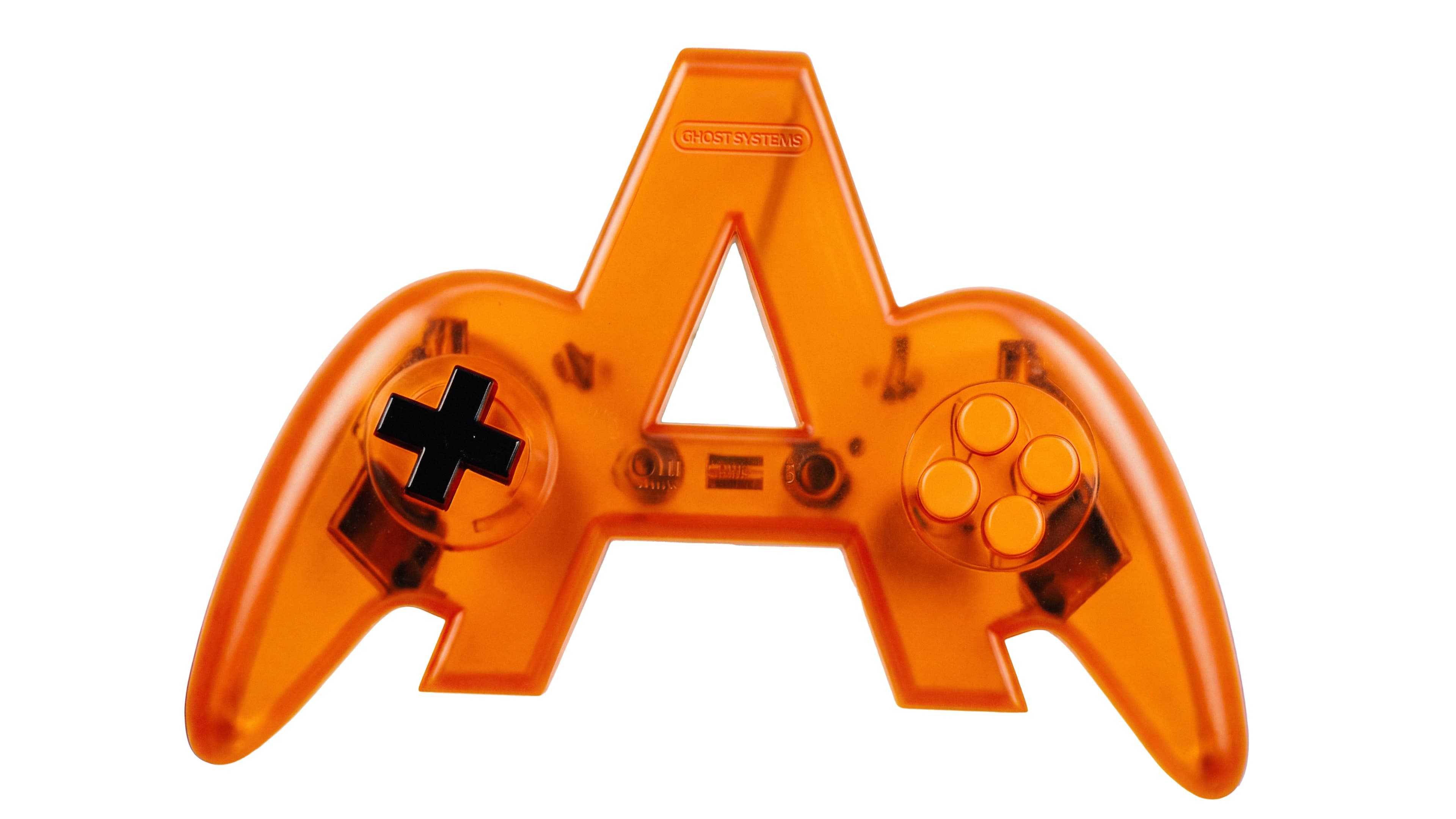
MMMMMM
▼
▼
SemiBold
23
MiniDisc: Format introduced by Sony in 1992 and reaching its peak commercial visibility in the late 1990s and early 2000s, particularly in Japan and Western Europe. A MiniDisc is a 64-millimetre magneto-optical disc enclosed in a plastic shuttle, capable of holding 74 or 80 minutes of audio at standard quality. The format used Sony's ATRAC compression and supported recording, track editing, and titling directly on the device. Notable players included the MZ-R30 (1996), the MZ-R55, the MZ-E10 (the thinnest portable player ever produced at 9.9 millimetres), and the Hi-MD line introduced in 2004. Despite a devoted user base, MiniDisc never achieved significant traction in North America and was effectively rendered obsolete by the iPod and other hard-drive-based players.
SemiBold Italic
23
The PlayStation 2 became the best-selling console in history, with over 155 million units sold by the time Sony discontinued it in early 2013. The console's commercial success was responsible, in significant part, for the consumer transition from VHS to DVD. Also known as Coconut Girl, though not to be confused with Key West Kitten, which shares that nickname. An aesthetic prevalent from roughly 2003 to 2008, sitting at the late edge of the Y2K period and overlapping with the early Frutiger Aero years. Characterized by tropical motifs—palm trees, hibiscus prints, seashells, sunsets, and beach scenery—rendered through the glossy graphical conventions of the period. The aesthetic was ubiquitous in tween-oriented media: Limited Too apparel, Lizzie McGuire and That's So Raven set design, Bratz packaging, and Disney Channel original films set in coastal locations. Surf Crush represents the warmer, more saturated counterpart to the cooler chrome-blue palettes that dominated earlier Y2K desig
SemiBold
16
At its peak it had approximately eighty million registered users. The Recording Industry Association of America filed suit on December 7, 1999, and Metallica filed a separate lawsuit in April 2000 after a demo of the unreleased song "I Disappear" leaked onto the platform. A federal injunction issued March 5, 2001, required Napster to block the trading of copyrighted material; the company was unable to comply and shut its network on July 1, 2001. Debut studio album by Linkin Park, released October 24, 2000, by Warner Bros. Records. The album combined alternative metal, rap-rock, and electronic production elements, sold over thirty million copies worldwide, and is the best-selling debut album of the 21st century. Hybrid Theory occupies the commercial centre of nu-metal, the dominant rock subgenre of the late 1990s and early 2000s, which fused hip-hop production techniques and downtuned guitars across a roster including Korn, Limp Bizkit, Slipknot, Papa Roach, Disturbed, Staind, P.O.D., and System of a Down. The genre's commercial peak coincided with Woodstock 1999, held July 22–25, 1999, in Rome, New York, and remembered principally for its violence, fires, and the structural collapse of festival infrastructure. Nu-metal declined commercially from approximately 2003 onwards as garage rock revival, emo, and post-hardcore replaced it on rock radio. Debut studio album by Linkin Park, released October 24, 2000, by Warner Bros. Records. The album combined alternative metal, rap-rock, and electronic production elements, sold over thirty million copies worldwide, and is the best-selling debut album of the 21st century. Hybrid Theory occupies the commercial centre of nu-metal, the dominant rock subgenre of the late 1990s and early 2000s, which fused hip-hop production techniques and downtuned guitars across a roster including Korn, Limp Bizkit, Slipknot, Papa Roach, Disturbed, Staind, P.O.D., and System of a Down. The genre's commercial peak coincided with Woodstock 1999, held July 22–25, 1999, in Rome, New York, and remembered principally for its violence, fires, and the structural collapse of festival infrastructure. Nu-metal declined commercially from approximately 2003 onwards as garage rock revival, emo, and post-hardcore replaced it on rock radio.
SemiBold Italic
16
Napster, and the file-sharing rupture Peer-to-peer file-sharing application launched June 1, 1999, by Shawn Fanning and Sean Parker. Napster used a centralised index that allowed users to search the music libraries of every connected user and download MP3 files directly between machines. At its peak it had approximately eighty million registered users. The Recording Industry Association of America filed suit on December 7, 1999, and Metallica filed a separate lawsuit in April 2000 after a demo of the unreleased song "I Disappear" leaked onto the platform. A federal injunction issued March 5, 2001, required Napster to block the trading of copyrighted material; the company was unable to comply and shut its network on July 1, 2001. Programming block on Cartoon Network that launched September 2, 2001, at 10:00 p.m. ET, with the previously shelved Home Movies episode "Director's Cut" airing as the official premiere. The block was developed by Mike Lazzo at Williams Street Studios, the same Atlanta-based production unit responsible for Space Ghost Coast to Coast. The initial lineup included Home Movies, Space Ghost Coast to Coast, The Brak Show, Sealab 2021, Harvey Birdman, Attorney at Law, and the anime series Cowboy Bebop. Aqua Teen Hunger Force premiered shortly after. The block initially ran from 10:00 p.m. to 1:00 a.m. on Sundays, with full repeats on Thursdays. The name refers to the policy at public swimming pools of clearing children from the water during designated adult-only intervals. Bumpers used white Helvetica on black backgrounds with minimal music, a deliberately cheap aesthetic that became the block's signature.
SemiBold
10
Debut studio album by Linkin Park, released October 24, 2000, by Warner Bros. Records. The album combined alternative metal, rap-rock, and electronic production elements, sold over thirty million copies worldwide, and is the best-selling debut album of the 21st century. Hybrid Theory occupies the commercial centre of nu-metal, the dominant rock subgenre of the late 1990s and early 2000s, which fused hip-hop production techniques and downtuned guitars across a roster including Korn, Limp Bizkit, Slipknot, Papa Roach, Disturbed, Staind, P.O.D., and System of a Down. The genre's commercial peak coincided with Woodstock 1999, held July 22–25, 1999, in Rome, New York, and remembered principally for its violence, fires, and the structural collapse of festival infrastructure. Nu-metal declined commercially from approximately 2003 onwards as garage rock revival, emo, and post-hardcore replaced it on rock radio. Debut studio album by Linkin Park, released October 24, 2000, by Warner Bros. Records. The album combined alternative metal, rap-rock, and electronic production elements, sold over thirty million copies worldwide, and is the best-selling debut album of the 21st century. Hybrid Theory occupies the commercial centre of nu-metal, the dominant rock subgenre of the late 1990s and early 2000s, which fused hip-hop production techniques and downtuned guitars across a roster including Korn, Limp Bizkit, Slipknot, Papa Roach, Disturbed, Staind, P.O.D., and System of a Down. The genre's commercial peak coincided with Woodstock 1999, held July 22–25, 1999, in Rome, New York, and remembered principally for its violence, fires, and the structural collapse of festival infrastructure. Nu-metal declined commercially from approximately 2003 onwards as garage rock revival, emo, and post-hardcore replaced it on rock radio.
SemiBold Italic
10
Solo debut album by Lauryn Hill, released August 25, 1998, by Ruffhouse and Columbia Records. Recorded principally at Tuff Gong Studios in Kingston, Jamaica, and Chung King Studios in New York. The album sold over twenty million copies worldwide, won five Grammy Awards including Album of the Year — making Hill the first woman to win five Grammys in a single night and the first hip-hop album to win Album of the Year — and is generally considered one of the defining albums of the late 1990s. Miseducation occupies the high point of the neo-soul movement, a genre vocabulary that included D'Angelo's Voodoo (2000), Erykah Badu's Mama's Gun (2000), Maxwell's Now (2001), and Jill Scott's Who Is Jill Scott? (2000). The movement's stylistic register — live instrumentation, Rhodes piano, vintage analogue warmth, and explicit reference to 1970s soul — distinguished it from the polished R&B of the period's mainstream charts.Solo debut album by Lauryn Hill, released August 25, 1998, by Ruffhouse and Columbia Records. Recorded principally at Tuff Gong Studios in Kingston, Jamaica, and Chung King Studios in New York. The album sold over twenty million copies worldwide, won five Grammy Awards including Album of the Year — making Hill the first woman to win five Grammys in a single night and the first hip-hop album to win Album of the Year — and is generally considered one of the defining albums of the late 1990s. Miseducation occupies the high point of the neo-soul movement, a genre vocabulary that included D'Angelo's Voodoo (2000), Erykah Badu's Mama's Gun (2000), Maxwell's Now (2001), and Jill Scott's Who Is Jill Scott? (2000). The movement's stylistic register — live instrumentation, Rhodes piano, vintage analogue warmth, and explicit reference to 1970s soul — distinguished it from the polished R&B of the period's mainstream charts.
SemiBold
10
A British dance-music genre that emerged from the London club scene in the mid-to-late 1990s, characterised by syncopated kick patterns at approximately 130 BPM, soulful vocal samples, and a structural emphasis on what producers called "the swing". Defining tracks include Artful Dodger's "Re-Rewind" featuring Craig David (1999), Shanks & Bigfoot's "Sweet Like Chocolate" (1999), DJ Pied Piper's "Do You Really Like It?" (2001), and So Solid Crew's "21 Seconds" (2001). The genre's commercial peak occurred between 1999 and 2001, after which it bifurcated into the more song-oriented two-step on the one hand and the rougher, MC-led grime that would emerge from the Roll Deep, Pay As U Go Cartel, and Ruff Sqwad collectives on the other. Wiley's "Wot Do U Call It?" (2004) is generally treated as the moment grime emerged from garage as a distinct genre. The early grime era is associated with pirate radio stations including Rinse FM, Déjà Vu FM, and Heat FM. A British dance-music genre that emerged from the London club scene in the mid-to-late 1990s, characterised by syncopated kick patterns at approximately 130 BPM, soulful vocal samples, and a structural emphasis on what producers called "the swing". Defining tracks include Artful Dodger's "Re-Rewind" featuring Craig David (1999), Shanks & Bigfoot's "Sweet Like Chocolate" (1999), DJ Pied Piper's "Do You Really Like It?" (2001), and So Solid Crew's "21 Seconds" (2001). The genre's commercial peak occurred between 1999 and 2001, after which it bifurcated into the more song-oriented two-step on the one hand and the rougher, MC-led grime that would emerge from the Roll Deep, Pay As U Go Cartel, and Ruff Sqwad collectives on the other. Wiley's "Wot Do U Call It?" (2004) is generally treated as the moment grime emerged from garage as a distinct genre. The early grime era is associated with pirate radio stations including Rinse FM, Déjà Vu FM, and Heat FM.
SemiBold Italic
10
The Strokes' debut album Is This It, released July 30, 2001, by Rough Trade in the United Kingdom and on October 9, 2001, by RCA in the United States, is generally credited with initiating a transatlantic garage-rock revival that ran approximately from 2001 to 2005. The associated movement included the White Stripes' White Blood Cells (2001) and Elephant (2003), the Hives' Veni Vidi Vicious (2000), the Vines' Highly Evolved (2002), Interpol's Turn on the Bright Lights (2002), the Yeah Yeah Yeahs' Fever to Tell (2003), Franz Ferdinand's self-titled debut (2004), and the Arctic Monkeys' Whatever People Say I Am, That's What I'm Not (2006). The movement was simultaneously a return to guitar-band fundamentals and a stylistic rejection of the nu-metal and teen-pop machinery that had dominated the immediately preceding period. The Strokes' debut album Is This It, released July 30, 2001, by Rough Trade in the United Kingdom and on October 9, 2001, by RCA in the United States, is generally credited with initiating a transatlantic garage-rock revival that ran approximately from 2001 to 2005. The associated movement included the White Stripes' White Blood Cells (2001) and Elephant (2003), the Hives' Veni Vidi Vicious (2000), the Vines' Highly Evolved (2002), Interpol's Turn on the Bright Lights (2002), the Yeah Yeah Yeahs' Fever to Tell (2003), Franz Ferdinand's self-titled debut (2004), and the Arctic Monkeys' Whatever People Say I Am, That's What I'm Not (2006). The movement was simultaneously a return to guitar-band fundamentals and a stylistic rejection of the nu-metal and teen-pop machinery that had dominated the immediately preceding period.
▼
▼
Bold
23
Three artefacts that bracket the period's musical-industrial transformation. Apple's iPod, released November 10, 2001, established the hard-drive-based personal music device as a mainstream consumer product. The iTunes Store, launched April 28, 2003, established legal digital music purchasing at $0.99 per track. Cultural eras are partly inventions of the people who survive them. The Y2K period as currently understood is a composite, assembled from product photography, music videos, advertising, screenshots, and the slightly distorted recollections of those who lived through it. The decline of the Y2K era unfolded gradually from 2000 to 2004, as the dot-com bubble burst, the September 11 attacks reshaped public sentiment, and the early War on Terror introduced a more anxious cultural register. Residual aesthetics lingered, but new styles—McBling, UrBling, Surf Crush, 2K1—emerged in parallel.
Bold Italic
23
Radiohead's In Rainbows, released October 10, 2007, as a name-your-own-price digital download, demonstrated that a major artist could circumvent the conventional release infrastructure entirely. While In Rainbows technically falls outside the Y2K window proper, it represents the conclusion of the structural rupture that Napster had initiated and that the streaming era — Spotify launched October 7, 2008 — would formalise. The compact disc has not recovered. Characteristic features include glossy reflective surfaces, glass-and-water imagery, soft tropical scenery, lens flares, the Frutiger typeface, and a general atmosphere of optimistic eco-futurism. The aesthetic is closely associated with the Microsoft Windows Vista interface, the Wii system menus, the original iPhone wallpapers, BlackBerry advertising, and a wide range of late-period tropical-fish screensavers. Though strictly post-Y2K, Frutiger Aero is generally treated as the millennial moment's aesthetic continuation rather than its successor, and the two are frequently confused or conflated by audiences encountering them retrospectively.
Bold
16
The iTunes Store, launched April 28, 2003, established legal digital music purchasing at $0.99 per track. Radiohead's In Rainbows, released October 10, 2007, as a name-your-own-price digital download, demonstrated that a major artist could circumvent the conventional release infrastructure entirely. While In Rainbows technically falls outside the Y2K window proper, it represents the conclusion of the structural rupture that Napster had initiated and that the streaming era — Spotify launched October 7, 2008 — would formalise. The compact disc has not recovered.
Bold Italic
16
The early 2000s mark the period during which rap and hip-hop overtook rock as the United States' best-selling musical genre. OutKast's Stankonia, released October 31, 2000, by LaFace Records, sold over five million copies in the US and won Best Rap Album at the 2002 Grammys. Eminem's The Eminem Show, released May 26, 2002, sold over twenty-seven million copies worldwide. Jay-Z's The Blueprint, released September 11, 2001, established Kanye West as a producer through his work on "Izzo (H.O.V.A.)" and "Heart of the City". 50 Cent's Get Rich or Die Tryin', released February 6, 2003, sold 872,000 copies in its first week, the highest debut-week total for a debut artist in Nielsen SoundScan history at that point. The period also includes the major works of Nelly, Ludacris, Missy Elliott, Beyoncé as a solo artist (Dangerously in Love, 2003), and the late work of Aaliyah, whose self-titled album was released in July 2001 a month before her death in a plane crash on August 25, 2001. Programming block on Cartoon Network that launched September 2, 2001, at 10:00 p.m. ET, with the previously shelved Home Movies episode "Director's Cut" airing as the official premiere. The block was developed by Mike Lazzo at Williams Street Studios, the same Atlanta-based production unit responsible for Space Ghost Coast to Coast. The initial lineup included Home Movies, Space Ghost Coast to Coast, The Brak Show, Sealab 2021, Harvey Birdman, Attorney at Law, and the anime series Cowboy Bebop. Aqua Teen Hunger Force premiered shortly after. The block initially ran from 10:00 p.m. to 1:00 a.m. on Sundays, with full repeats on Thursdays. The name refers to the policy at public swimming pools of clearing children from the water during designated adult-only intervals. Bumpers used white Helvetica on black backgrounds with minimal music, a deliberately cheap aesthetic that became the block's signature.
Bold
10
Released March 31, 1999, written and directed by the Wachowskis and produced by Joel Silver for Warner Bros. The film starred Keanu Reeves, Laurence Fishburne, Carrie-Anne Moss, and Hugo Weaving. Bullet time, a visual effect developed by John Gaeta using a circular array of still cameras triggered in sequence, became one of the decade's most imitated cinematic techniques. The film grossed approximately $467 million worldwide, won four Academy Awards, and reorganized the action genre's vocabulary around long black coats, mirrored sunglasses, green-tinted color grading, and questions about the ontological status of perceived reality. Released March 31, 1999, written and directed by the Wachowskis and produced by Joel Silver for Warner Bros. The film starred Keanu Reeves, Laurence Fishburne, Carrie-Anne Moss, and Hugo Weaving. Bullet time, a visual effect developed by John Gaeta using a circular array of still cameras triggered in sequence, became one of the decade's most imitated cinematic techniques. The film grossed approximately $467 million worldwide, won four Academy Awards, and reorganized the action genre's vocabulary around long black coats, mirrored sunglasses, green-tinted color grading, and questions about the ontological status of perceived reality. Released March 31, 1999, written and directed by the Wachowskis and produced by Joel Silver for Warner Bros. The film starred Keanu Reeves, Laurence Fishburne, Carrie-Anne Moss, and Hugo Weaving. Bullet time, a visual effect developed by John Gaeta using a circular array of still cameras triggered in sequence, became one of the decade's most imitated cinematic techniques. The film grossed approximately $467 million worldwide, won four Academy Awards, and reorganized the action genre's vocabulary around long black coats, mirrored sunglasses, green-tinted color grading, and questions about the ontological status of perceived reality. Released March 31, 1999, written and directed by the Wachowskis and produced by Joel Silver for Warner Bros. The film starred Keanu Reeves, Laurence Fishburne, Carrie-Anne Moss, and Hugo Weaving. Bullet time, a visual effect developed by John Gaeta using a circular array of still cameras triggered in sequence, became one of the decade's most imitated cinematic techniques. The film grossed approximately $467 million worldwide, won four Academy Awards, and reorganized the action genre's vocabulary around long black coats, mirrored sunglasses, green-tinted color grading, and questions about the ontological status of perceived reality.
SemiMono

Bold
10
Trance, a genre that had existed in German clubs throughout the early 1990s, achieved its first sustained mainstream presence between approximately 1998 and 2002. Defining tracks include ATB's "9 PM (Till I Come)" (1998), Robert Miles' "Children" (slightly earlier, 1995), Darude's "Sandstorm" (1999), Alice Deejay's "Better Off Alone" (1998–1999), Ian Van Dahl's "Castles in the Sky" (2000), and the long catalogue of releases on Anjunabeats, Armada, and Black Hole Recordings. The era's principal mix-CD vehicles, including the Ministry of Sound and Cream compilations, brought trance into ordinary households as ambient driving and pre-club music. Paul van Dyk, Tiësto, Armin van Buuren, Sasha, and John Digweed established themselves during this period as the genre's principal touring DJs. Trance, a genre that had existed in German clubs throughout the early 1990s, achieved its first sustained mainstream presence between approximately 1998 and 2002. Defining tracks include ATB's "9 PM (Till I Come)" (1998), Robert Miles' "Children" (slightly earlier, 1995), Darude's "Sandstorm" (1999), Alice Deejay's "Better Off Alone" (1998–1999), Ian Van Dahl's "Castles in the Sky" (2000), and the long catalogue of releases on Anjunabeats, Armada, and Black Hole Recordings. The era's principal mix-CD vehicles, including the Ministry of Sound and Cream compilations, brought trance into ordinary households as ambient driving and pre-club music. Paul van Dyk, Tiësto, Armin van Buuren, Sasha, and John Digweed established themselves during this period as the genre's principal touring DJs.
Bold Italic
10
The Y2K musical period is structurally distinguished by its position at the inflection point between the album era and the streaming era, between MTV's primacy and YouTube's primacy, and between the major label's centralised control of distribution and the gradual loss of that control. The period's stylistic diversity — bubblegum pop and nu-metal and trance and garage and neo-soul all sharing simultaneous commercial space — is partly an artefact of an industry whose distribution machinery still favoured wide format-segmentation, and partly a function of MTV's willingness to host genre-distinct programming blocks (TRL, Headbangers Ball, 120 Minutes, Yo! MTV Raps) within the same daily schedule. The contemporary music industry, organised principally around algorithmic recommendation rather than format-segmented distribution, has not produced an equivalent diversity since. The reader is encouraged to treat this index as a partial map of a moment whose particular conditions of cultural production are unlikely to recur. The Y2K musical period is structurally distinguished by its position at the inflection point between the album era and the streaming era, between MTV's primacy and YouTube's primacy, and between the major label's centralised control of distribution and the gradual loss of that control. The period's stylistic diversity — bubblegum pop and nu-metal and trance and garage and neo-soul all sharing simultaneous commercial space — is partly an artefact of an industry whose distribution machinery still favoured wide format-segmentation, and partly a function of MTV's willingness to host genre-distinct programming blocks (TRL, Headbangers Ball, 120 Minutes, Yo! MTV Raps) within the same daily schedule. The contemporary music industry, organised principally around algorithmic recommendation rather than format-segmented distribution, has not produced an equivalent diversity since. The reader is encouraged to treat this index as a partial map of a moment whose particular conditions of cultural production are unlikely to recur.
▼
▼
ExtraBold
23
AOL Instant Messenger Released by America Online on May 7, 1997, as a standalone application available to non-AOL users. GeoCities founded in 1994 by David Bohnett and John Rezner, originally as Beverly Hills Internet. The service was shut down in the United States on October 26, 2009, with most user pages deleted; large archival projects, notably by the Internet Archive and the volunteer Archive Team, preserved a substantial fraction of the content. GeoCities remains the most complete record of an amateur, decorative, structurally optimistic web that no longer exists.
ExtraBold Italic
23
The client introduced the buddy list, the away message, the door-creak login sound, and the screen name as an identity object. At its 2001 peak, AIM had approximately fifty-three million active users in the United States. Profiles permitted brief biographical information and song lyrics. Characteristic features include glossy reflective surfaces, glass-and-water imagery, soft tropical scenery, lens flares, the Frutiger typeface, and a general atmosphere of optimistic eco-futurism. The aesthetic is closely associated with the Microsoft Windows Vista interface, the Wii system menus, the original iPhone wallpapers, BlackBerry advertising, and a wide range of late-period tropical-fish screensavers. Though strictly post-Y2K, Frutiger Aero is generally treated as the millennial moment's aesthetic continuation rather than its successor, and the two are frequently confused or conflated by audiences encountering them retrospectively.
ExtraBold
16
GeoCities founded in 1994 by David Bohnett and John Rezner, originally as Beverly Hills Internet. The service was shut down in the United States on October 26, 2009, with most user pages deleted; large archival projects, notably by the Internet Archive and the volunteer Archive Team, preserved a substantial fraction of the content. GeoCities remains the most complete record of an amateur, decorative, structurally optimistic web that no longer exists. Debut studio album by Linkin Park, released October 24, 2000, by Warner Bros. Records. The album combined alternative metal, rap-rock, and electronic production elements, sold over thirty million copies worldwide, and is the best-selling debut album of the 21st century. Hybrid Theory occupies the commercial centre of nu-metal, the dominant rock subgenre of the late 1990s and early 2000s, which fused hip-hop production techniques and downtuned guitars across a roster including Korn, Limp Bizkit, Slipknot, Papa Roach, Disturbed, Staind, P.O.D., and System of a Down. The genre's commercial peak coincided with Woodstock 1999, held July 22–25, 1999, in Rome, New York, and remembered principally for its violence, fires, and the structural collapse of festival infrastructure. Nu-metal declined commercially from approximately 2003 onwards as garage rock revival, emo, and post-hardcore replaced it on rock radio. Debut studio album by Linkin Park, released October 24, 2000, by Warner Bros. Records. The album combined alternative metal, rap-rock, and electronic production elements, sold over thirty million copies worldwide, and is the best-selling debut album of the 21st century. Hybrid Theory occupies the commercial centre of nu-metal, the dominant rock subgenre of the late 1990s and early 2000s, which fused hip-hop production techniques and downtuned guitars across a roster including Korn, Limp Bizkit, Slipknot, Papa Roach, Disturbed, Staind, P.O.D., and System of a Down. The genre's commercial peak coincided with Woodstock 1999, held July 22–25, 1999, in Rome, New York, and remembered principally for its violence, fires, and the structural collapse of festival infrastructure. Nu-metal declined commercially from approximately 2003 onwards as garage rock revival, emo, and post-hardcore replaced it on rock radio.
ExtraBold Italic
16
Pages were organized into themed virtual neighborhoods with names such as Hollywood (entertainment), Area51 (science fiction), SunsetStrip (rock and punk), and Heartland (family and home). Each user received a numbered address within their chosen neighborhood. Yahoo acquired GeoCities in January 1999 for approximately $3.57 billion in stock. Pages were organized into themed virtual neighborhoods with names such as Hollywood (entertainment), Area51 (science fiction), SunsetStrip (rock and punk), and Heartland (family and home). Each user received a numbered address within their chosen neighborhood. Yahoo acquired GeoCities in January 1999 for approximately $3.57 billion in stock. Programming block on Cartoon Network that launched September 2, 2001, at 10:00 p.m. ET, with the previously shelved Home Movies episode "Director's Cut" airing as the official premiere. The block was developed by Mike Lazzo at Williams Street Studios, the same Atlanta-based production unit responsible for Space Ghost Coast to Coast. The initial lineup included Home Movies, Space Ghost Coast to Coast, The Brak Show, Sealab 2021, Harvey Birdman, Attorney at Law, and the anime series Cowboy Bebop. Aqua Teen Hunger Force premiered shortly after. The block initially ran from 10:00 p.m. to 1:00 a.m. on Sundays, with full repeats on Thursdays. The name refers to the policy at public swimming pools of clearing children from the water during designated adult-only intervals. Bumpers used white Helvetica on black backgrounds with minimal music, a deliberately cheap aesthetic that became the block's signature.
ExtraBold
@@@@@@
ExtraBold
10
An internet aesthetic and electronic music microgenre that originated on Tumblr and Twitter in 2011. Though post-Y2K by roughly seven years, Seapunk is a direct visual descendant of Y2K Futurism and is included here as one of its earliest revivals. The aesthetic fuses aquatic themes—dolphins, waves, seashells, pixelated water—with imagery from 1990s cyberculture, including early 3D computer graphics and Geocities-era nautical motifs. The visual identity centers on shades of turquoise, cyan, and aquamarine. Seapunk had a brief period of mainstream visibility in 2012 before its visual language was absorbed into and superseded by Vaporwave, with which it shares significant ancestry. An internet aesthetic and electronic music microgenre that originated on Tumblr and Twitter in 2011. Though post-Y2K by roughly seven years, Seapunk is a direct visual descendant of Y2K Futurism and is included here as one of its earliest revivals. The aesthetic fuses aquatic themes—dolphins, waves, seashells, pixelated water—with imagery from 1990s cyberculture, including early 3D computer graphics and Geocities-era nautical motifs. The visual identity centers on shades of turquoise, cyan, and aquamarine. Seapunk had a brief period of mainstream visibility in 2012 before its visual language was absorbed into and superseded by Vaporwave, with which it shares significant ancestry. An internet aesthetic and electronic music microgenre that originated on Tumblr and Twitter in 2011. Though post-Y2K by roughly seven years, Seapunk is a direct visual descendant of Y2K Futurism and is included here as one of its earliest revivals. The aesthetic fuses aquatic themes—dolphins, waves, seashells, pixelated water—with imagery from 1990s cyberculture, including early 3D computer graphics and Geocities-era nautical motifs. The visual identity centers on shades of turquoise, cyan, and aquamarine. Seapunk had a brief period of mainstream visibility in 2012 before its visual language was absorbed into and superseded by Vaporwave, with which it shares significant ancestry. An internet aesthetic and electronic music microgenre that originated on Tumblr and Twitter in 2011. Though post-Y2K by roughly seven years, Seapunk is a direct visual descendant of Y2K Futurism and is included here as one of its earliest revivals. The aesthetic fuses aquatic themes—dolphins, waves, seashells, pixelated water—with imagery from 1990s cyberculture, including early 3D computer graphics and Geocities-era nautical motifs. The visual identity centers on shades of turquoise, cyan, and aquamarine. Seapunk had a brief period of mainstream visibility in 2012 before its visual language was absorbed into and superseded by Vaporwave, with which it shares significant ancestry.
ExtraBold Italic
10
A revival of Y2K Futurism that emerged in the late 2010s and gained mainstream popularity in the early 2020s. Coined by Evan Collins in 2016, the aesthetic in its foundational form emphasizes Eastern, particularly Japanese, graphic design influences, highly saturated colors, and a convergence with the metallic, liquid-like forms of Metalheart. In its broader interpretation, driven principally by TikTok, Neo-Y2K adapts the iconic fashion and pop culture of the original era for a Gen Z audience, blending nostalgia with modern sensibilities. The aesthetic is distinguished from its predecessor primarily by its motivation: where the original Y2K style was born from techno-optimism about an unknown digital future, Neo-Y2K is rooted in nostalgia for that same period, viewed from a present in which the digital future has already arrived. A revival of Y2K Futurism that emerged in the late 2010s and gained mainstream popularity in the early 2020s. Coined by Evan Collins in 2016, the aesthetic in its foundational form emphasizes Eastern, particularly Japanese, graphic design influences, highly saturated colors, and a convergence with the metallic, liquid-like forms of Metalheart. In its broader interpretation, driven principally by TikTok, Neo-Y2K adapts the iconic fashion and pop culture of the original era for a Gen Z audience, blending nostalgia with modern sensibilities. The aesthetic is distinguished from its predecessor primarily by its motivation: where the original Y2K style was born from techno-optimism about an unknown digital future, Neo-Y2K is rooted in nostalgia for that same period, viewed from a present in which the digital future has already arrived. Seapunk had a brief period of mainstream visibility in 2012 before its visual language was absorbed into and superseded by Vaporwave, with which it shares significant ancestry. An internet aesthetic and electronic music microgenre that originated on Tumblr and Twitter in 2011. Though post-Y2K by roughly seven years, Seapunk is a direct visual descendant of Y2K Futurism and is included here as one of its earliest revivals. The aesthetic fuses aquatic themes—dolphins, waves, seashells, pixelated water—with imagery from 1990s cyberculture, including early 3D computer graphics and Geocities-era nautical motifs. The visual identity centers on shades of turquoise, cyan, and aquamarine. Seapunk had a brief period of mainstream visibility in 2012 before its visual language was absorbed into and superseded by Vaporwave, with which it shares significant ancestry.
ExtraBold
10
An abbreviation for Year 3000. A contemporary aesthetic movement functioning as the futuristic evolution of Y2K Futurism. Y3K borrows the retro-futurist optimism of its predecessor but pushes it further, embracing an amplified and more refined look that leans into a colder, more dystopian atmosphere rendered with sharp precision. The aesthetic is heavily influenced by post-human narratives, advanced visual effects, and high-fashion brands such as Mugler, Balenciaga, Diesel, and Gentle Monster. Fashion features sleek lines, metallic textures, and form-fitting "second skin" silhouettes constructed from sleek leather, glossy PVC, ethereal organdy, metallic silver, and holographic fabrics. The aesthetic is closely associated with the K-pop group Aespa, whose proprietary visual IP has been sufficiently distinct to generate its own sub-label, Aespacore, generally treated as a specialized manifestation of Y3K rather than a separate movement. An abbreviation for Year 3000. A contemporary aesthetic movement functioning as the futuristic evolution of Y2K Futurism. Y3K borrows the retro-futurist optimism of its predecessor but pushes it further, embracing an amplified and more refined look that leans into a colder, more dystopian atmosphere rendered with sharp precision. The aesthetic is heavily influenced by post-human narratives, advanced visual effects, and high-fashion brands such as Mugler, Balenciaga, Diesel, and Gentle Monster. Fashion features sleek lines, metallic textures, and form-fitting "second skin" silhouettes constructed from sleek leather, glossy PVC, ethereal organdy, metallic silver, and holographic fabrics. The aesthetic is closely associated with the K-pop group Aespa, whose proprietary visual IP has been sufficiently distinct to generate its own sub-label, Aespacore, generally treated as a specialized manifestation of Y3K rather than a separate movement.
ExtraBold Italic
10
Cultural eras are partly inventions of the people who survive them. The Y2K period as currently understood is a composite, assembled from product photography, music videos, advertising, screenshots, and the slightly distorted recollections of those who lived through it. The decline of the Y2K era unfolded gradually from 2000 to 2004, as the dot-com bubble burst, the September 11 attacks reshaped public sentiment, and the early War on Terror introduced a more anxious cultural register. Residual aesthetics lingered, but new styles—McBling, UrBling, Surf Crush, 2K1—emerged in parallel. The post-2004 transition to Frutiger Aero officially concluded the era's visual project. Since the mid-to-late 2010s, Y2K has experienced a sustained resurgence on social media platforms, with this revival sometimes termed Neo-Y2K and fueled by what scholars describe as a twenty-year nostalgia cycle. The reader is encouraged to treat this index accordingly: as a guide to a recent period whose surfaces have begun to repeat. Cultural eras are partly inventions of the people who survive them. The Y2K period as currently understood is a composite, assembled from product photography, music videos, advertising, screenshots, and the slightly distorted recollections of those who lived through it. The decline of the Y2K era unfolded gradually from 2000 to 2004, as the dot-com bubble burst, the September 11 attacks reshaped public sentiment, and the early War on Terror introduced a more anxious cultural register. Residual aesthetics lingered, but new styles—McBling, UrBling, Surf Crush, 2K1—emerged in parallel. The post-2004 transition to Frutiger Aero officially concluded the era's visual project. Since the mid-to-late 2010s, Y2K has experienced a sustained resurgence on social media platforms, with this revival sometimes termed Neo-Y2K and fueled by what scholars describe as a twenty-year nostalgia cycle. The reader is encouraged to treat this index accordingly: as a guide to a recent period whose surfaces have begun to repeat.

Through seamless variable axes that scale across display, text, and coding functions, Ghost Superfamily delves into the full potential of variable font technology, giving us the opportunity to explore its applications twofold as our most robust design tool for typographers, and as a new technological standard in our craft. We spent four years developing the superfamily, which now includes seventy-two styles across five weights with an optical size and mono axes, all integrated into a single variable designspace.
Loading…
calt
Contextual Alternates
case
Case-Sensitive Forms
ccmp
Glyph Composition/Decomposition
dlig
Discretionary Ligatures
dnom
Denominators
frac
Fractions
liga
Standard Ligatures
lnum
Lining Figures
locl
Localized Forms
numr
Numerators
onum
Oldstyle Figures
ordn
Ordinals
pnum
Proportional Figures
ss01
Alternate a (roman)
ss02
Alternate k (italic)
ss03
Alternate IJ
ss04
Alternate Arrows
ss05
Alternate boxes
ss06
Circled Numbers
ss07
Roman Numerals
subs
Subscript
sups
Superscript
tnum
Tabular Figures
Abron, Acheron, Achinese, Acholi, Achuar-Shiwiar, Adangme, Afar, Afrikaans, Aguaruna, Ahtna, Akoose, Alekano, Aleut, Algonquin, Amahuaca, Amarakaeri, Amis, Anaang, Andaandi, Anufo, Anuta, Ao Naga, Apinayé, Arabela, Aragonese, Arbëreshë Albanian, Arvanitika Albanian, Asháninka, Ashéninka Perené, Asu (Tanzania), Atayal, Awa-Cuaiquer, Awing, Baatonum, Bafia, Balinese, Bambara, Banjar, Baoulé, Bari, Basque, Batak Dairi, Batak Karo, Batak Mandailing, Batak Simalungun, Batak Toba, Bemba (Zambia), Bena (Tanzania), Biali, Bikol, Bini, Bislama, Boko (Benin), Bora, Borana-Arsi-Guji Oromo, Bosnian, Breton, Buginese, Candoshi-Shapra, Caquinte, Caribbean Hindustani, Cashibo-Cacataibo, Cashinahua, Catalan, Cebuano, Central Aymara, Central Kurdish, Central Nahuatl, Cerma, Chachi, Chamorro, Chavacano, Chayahuita, Chiga, Chiltepec Chinantec, Chokwe, Chuukese, Cimbrian, Cofán, Congo Swahili, Cook Islands Māori, Cornish, Corsican, Creek, Crimean Tatar, Croatian, Czech, Danish, Dehu, Dendi (Benin), Dimli, Dutch, Dyula, Eastern Arrernte, Eastern Maninkakan, Eastern Oromo, Efik, Embu, English, Ese Ejja, Esperanto, Ewondo, Fanti, Faroese, Fijian, Filipino, Finnish, French, Friulian, Ga, Gagauz, Galician, Ganda, Garifuna, Ga'anda, German, Gheg Albanian, Gilbertese, Gonja, Gooniyandi, Gourmanchéma, Guadeloupean Creole French, Gusii, Gwichʼin, Haitian, Hani, Hiligaynon, Ho-Chunk, Hopi, Huastec, Hungarian, Hän, Ibibio, Icelandic, Ido, Idoma, Iloko, Inari Sami, Indonesian, Interglossa, Interlingua, Interlingue, Irish, Istro Romanian, Italian, Ixcatlán Mazatec, Jamaican Creole English, Javanese, Jenaama Bozo, Jola-Fonyi, K'iche', Kabuverdianu, Kaingang, Kala Lagaw Ya, Kalaallisut, Kalenjin, Kamba (Kenya), Kaonde, Kaqchikel, Karelian, Kashubian, Kekchí, Kenzi/Mattokki, Khasi, Kikuyu, Kimbundu, Kinyarwanda, Kirmanjki, Kituba (DRC), Klingon, Kongo, Konzo, Koyra Chiini Songhay, Koyraboro Senni Songhai, Krio, Kuanyama, Kven Finnish, Kölsch, Ladin, Ladino, Langi, Latgalian, Ligurian, Lingala, Lithuanian, Lojban, Lombard, Low German, Lower Sorbian, Lozi, Luba-Katanga, Luba-Lulua, Lule Sami, Luo (Kenya and Tanzania), Luxembourgish, Macedo-Romanian, Makhuwa, Makhuwa-Meetto, Makonde, Makwe, Malagasy, Malaysian, Maltese, Mamara Senoufo, Mandinka, Mandjak, Mankanya, Manx, Maore Comorian, Maori, Mapudungun, Marshallese, Masai, Matsés, Mauritian Creole, Mende (Sierra Leone), Meriam Mir, Meru, Meta', Metlatónoc Mixtec, Mi'kmaq, Minangkabau, Mirandese, Moba, Mohawk, Montagnais, Montenegrin, Munsee, Murrinh-Patha, Murui Huitoto, Muslim Tat, Mwani, Mískito, Naga Pidgin, Ndonga, Neapolitan, Ngazidja Comorian, Niuean, Nobiin, Nomatsiguenga, North Azerbaijani, North Ndebele, Northern Kissi, Northern Kurdish, Northern Qiandong Miao, Northern Sami, Northern Uzbek, Northwestern Ojibwa, Norwegian, Novial, Nyamwezi, Nyanja, Nyankole, Nyemba, Nzima, Occitan, Ojitlán Chinantec, Omaha-Ponca, Orma, Oroqen, Otuho, Palauan, Paluan, Pampanga, Papantla Totonac, Papiamento, Paraguayan Guaraní, Pedi, Picard, Pichis Ashéninka, Piemontese, Pijin, Pintupi-Luritja, Pipil, Pite Sami, Pohnpeian, Polish, Portuguese, Potawatomi, Purepecha, Páez, Quechua, Romanian, Romansh, Rotokas, Rundi, Rwa, Samburu, Samoan, Sango, Sangu (Tanzania), Saramaccan, Sardinian, Scots, Scottish Gaelic, Sena, Seri, Seselwa Creole French, Shambala, Sharanahua, Shawnee, Shilluk, Shipibo-Conibo, Shona, Shuar, Sicilian, Silesian, Slovak, Slovenian, Soga, Somali, Soninke, South Azerbaijani, South Ndebele, Southern Aymara, Southern Bobo Madaré, Southern Dagaare, Southern Qiandong Miao, Southern Sami, Southern Sotho, Spanish, Sranan Tongo, Standard Estonian, Standard Latvian, Standard Malay, Sundanese, Susu, Swahili, Swati, Swedish, Swiss German, Syenara Senoufo, Tagalog, Tahitian, Taita, Talysh, Tasawaq, Tedim Chin, Tetum, Tetun Dili, Timne, Tiv, Tiéyaxo Bozo, Toba, Tok Pisin, Tokelau, Toki Pona, Tonga (Tonga Islands), Tonga (Zambia), Tosk Albanian, Tsakhur, Tsonga, Tswana, Tumbuka, Turkish, Turkmen, Tuvalu, Twi, Tzeltal, Tzotzil, Uab Meto, Umbundu, Ume Sami, Upper Guinea Crioulo, Upper Sorbian, Urarina, Venetian, Veps, Volapük, Võro, Waama, Walloon, Walser, Wamey, Wangaaybuwan-Ngiyambaa, Waorani, Waray (Philippines), Warlpiri, Wasa, Wayuu, Welsh, West Central Oromo, West-Central Limba, Western Abnaki, Western Frisian, Wik-Mungkan, Wiradjuri, Wolof, Xavánte, Xhosa, Yagua, Yanesha', Yangben, Yanomamö, Yao, Yapese, Yindjibarndi, Yucateco, Zarma, Zulu, Zuni, Záparo